
Last updated October 16, 2026
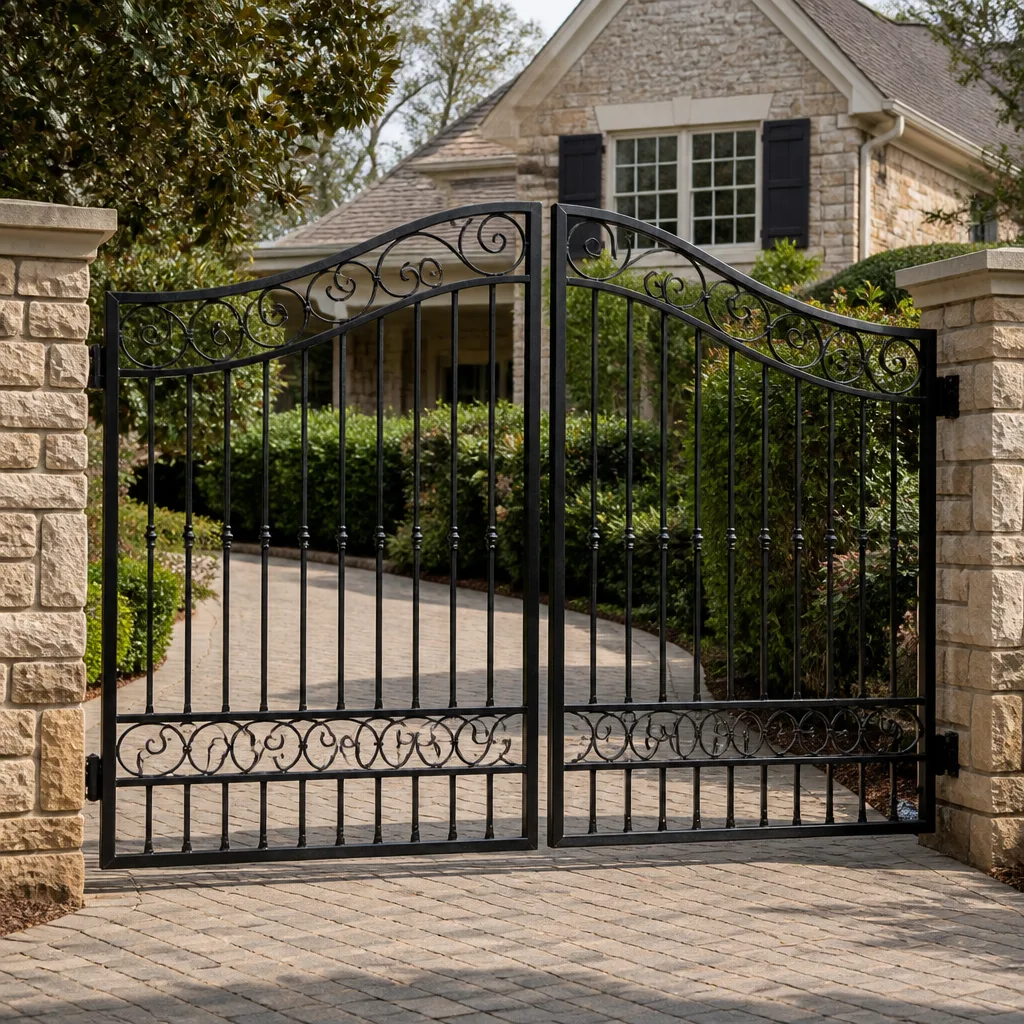 Wrought iron
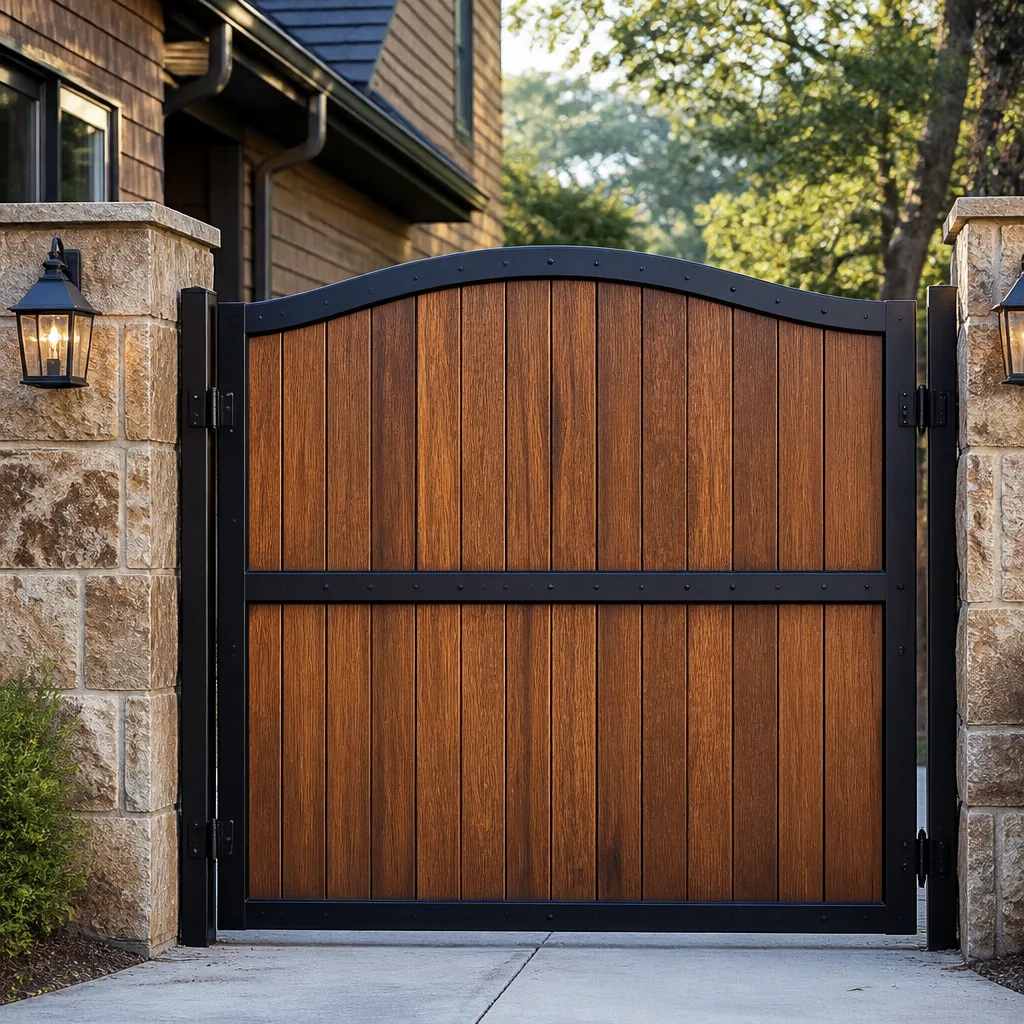 Wood & steel frame
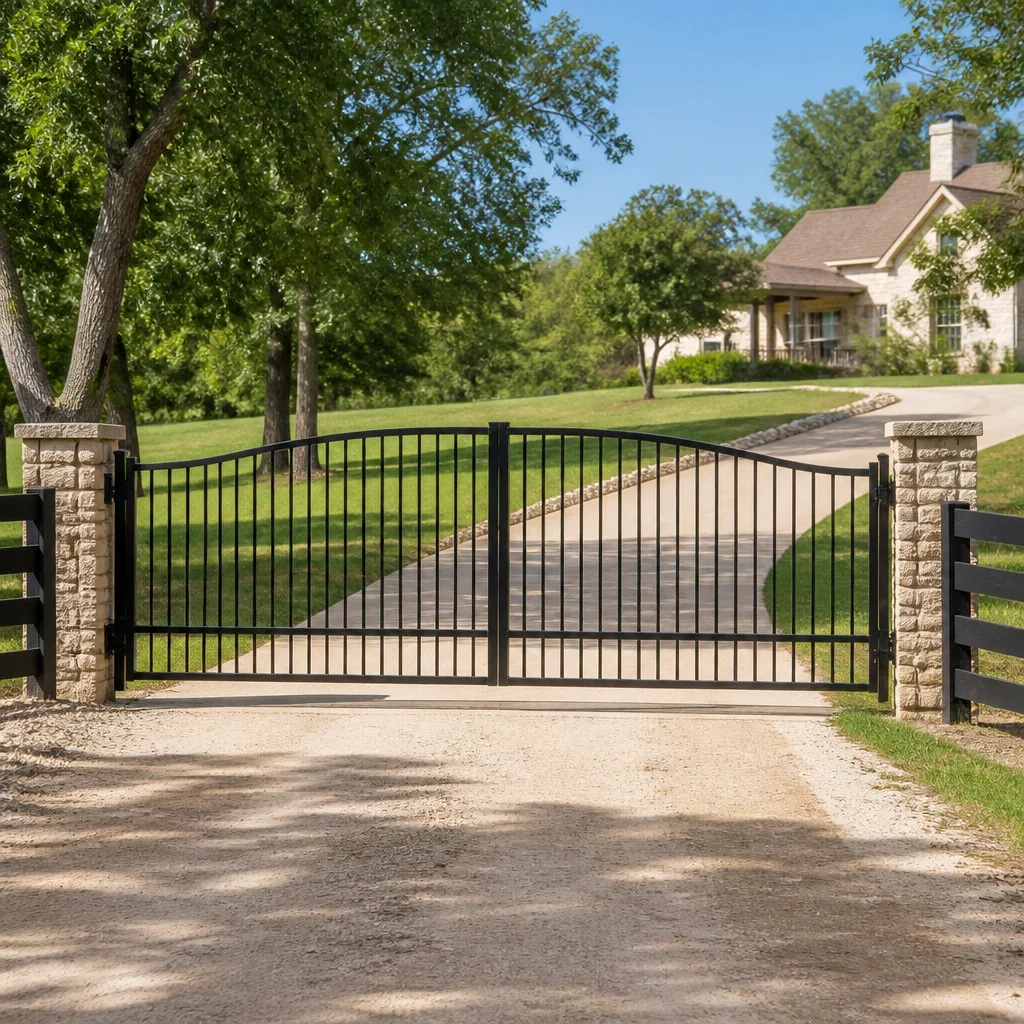 Farm & ranch
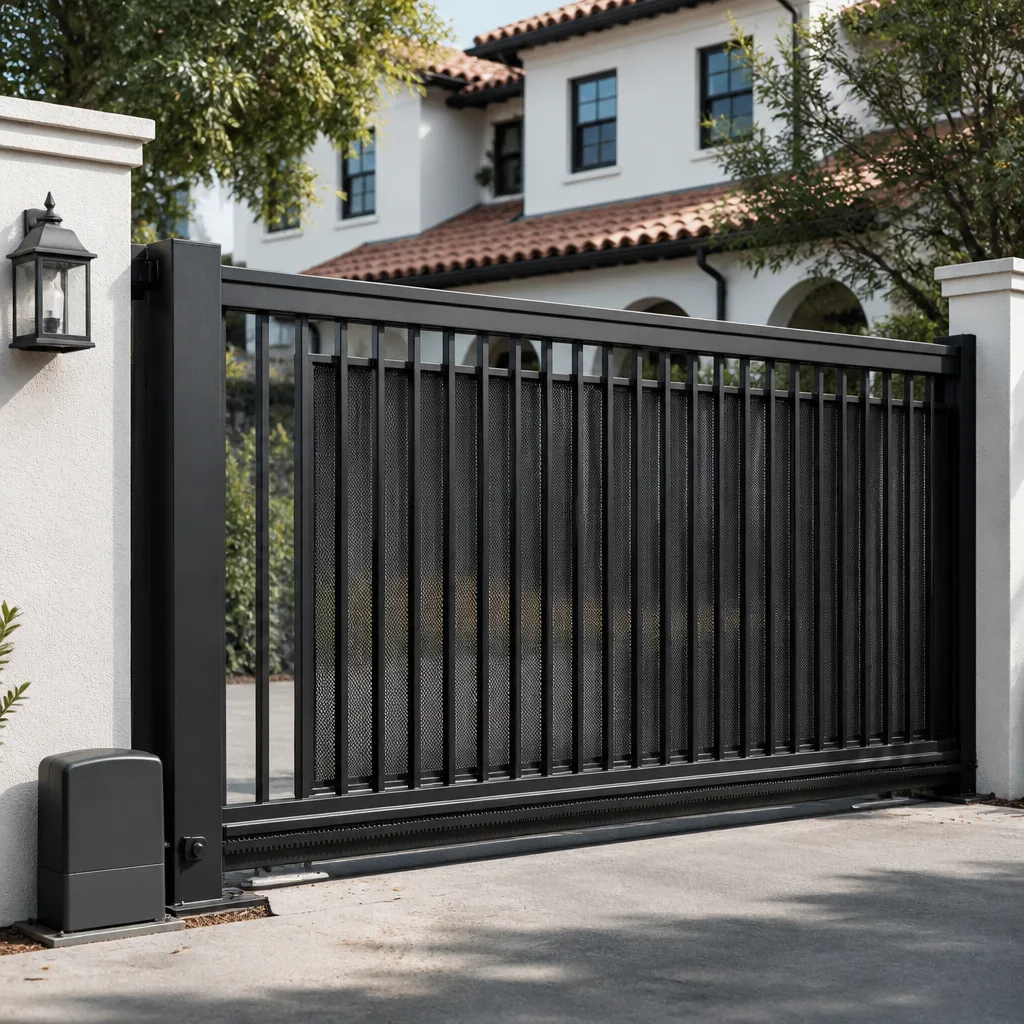 Sliding driveway gates
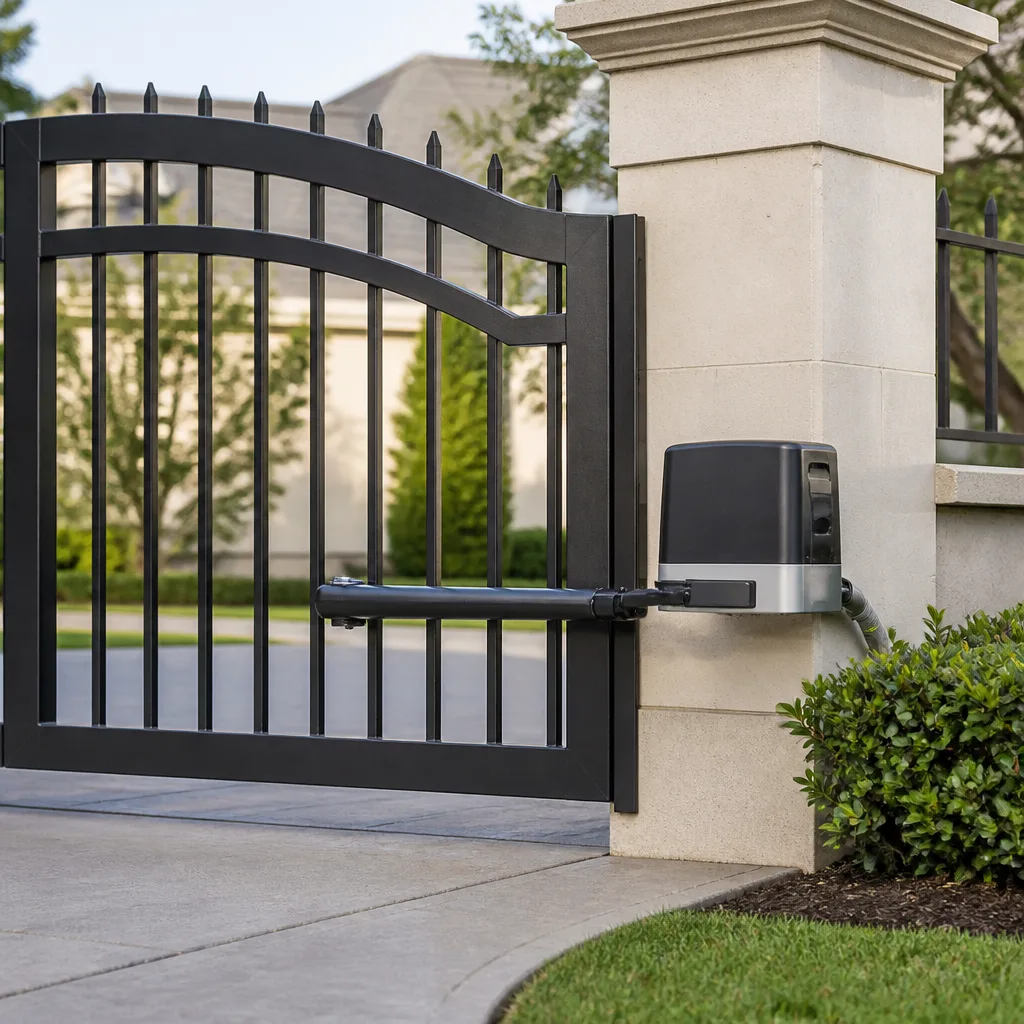 LiftMaster operators
Free on-site gate assessment - hinges, posts, and your LiftMaster or Nice gate operator checked before anything is quoted
The assessment is free and the quote is the invoice.
Get your free estimateGate Repair Permits, Codes & Inspections in FL: What You Need to Know
A gate repair that costs $800 can become a $4,000 problem at closing if the contractor pulled no permit and the work altered the gate’s automation or structural footprint. Florida title companies are increasingly flagging unpermitted gate and opener work during pre-listing inspections, and sellers are getting stuck paying for retroactive permits, inspections, and sometimes full re-installation before the deal can move. In Orlando, where automatic driveway gates and swing gates are common across College Park, Winter Park, Baldwin Park, and Dr. Phillips, this issue is showing up more every year. This guide explains what actually triggers a permit, how Orlando and Orange County rules differ, what “like-for-like” means, how to verify a permit yourself, and how to fix unpermitted work before you list your home.
Styles & brands we work with
Quick Answer
In Florida, a simple gate repair that swaps like-for-like parts (same motor, same hinges, same footprint) usually does not require a permit. But replacing a gate motor with a different model, adding automation to a previously manual gate, relocating a gate, or changing its swing direction often does require a permit under Florida Building Code Section 1008, and in Orlando the permitting path runs through the City of Orlando Permitting Services Division if you’re inside city limits, or Orange County if you’re in unincorporated areas. When in doubt, check before the work starts because retroactive permits are slower, more expensive, and sometimes require tearing out completed work.
Table of Contents
- What Florida Building Code Says About Gates
- Orlando vs. Orange County: Two Different Permitting Paths
- What “Like-for-Like” Replacement Actually Means
- When You Definitely Need a Permit
- How HOA Rules Stack on Top of Florida Code
- How to Verify a Contractor Pulled a Permit
- Unpermitted Gate Work and Home Sales: The Fix Before You List
- Common Mistakes to Avoid
- When to Call a Professional
- Frequently Asked Questions
- The Bottom Line
What Florida Building Code Says About Gates
Florida Building Code (FBC) Section 1008 governs gates in the path of egress, which covers most driveway and pedestrian gates attached to a fence line around a home. The core rule: a gate cannot reduce the required exit width, cannot swing into the path of egress in a way that blocks escape, and powered gates must meet specific safety device requirements including obstruction sensors, pressure edges, and release mechanisms. An automatic gate in Orlando that lacks a functioning reverse loop or pressure edge is not just a repair issue; it’s a code compliance issue, and if someone is injured, the homeowner carries the liability because the property, not the installer, is where the claim lands.
What surprises most homeowners is that FBC applies even when no permit was pulled. Code compliance and permitting are separate things. You can have a gate installed perfectly to code with no permit pulled, and you can have a permitted gate that falls out of code compliance five years later when a sensor fails. The permit is the paperwork trail. The code is the safety standard. Both matter when you sell.
FBC also requires that automatic gates in residential use have a manual release mechanism accessible without tools, so a firefighter or first responder can open the gate if power fails. In our experience around Orlando, a surprising number of older LiftMaster and FAAC gate openers have frozen or painted-over release handles because they’re never tested. A five-minute check during any Gate Repair in Orlando visit catches this before an emergency does.
Orlando vs. Orange County: Two Different Permitting Paths
If your address is inside Orlando city limits, the City of Orlando Permitting Services Division handles your permit. If you’re in unincorporated Orange County, you go through Orange County Division of Building Safety. The two entities have different fee schedules, different inspection turnaround targets, and occasionally different interpretations of what counts as “repair” versus “alteration.” A gate at a home in Audubon Park follows city rules. The same gate a mile east in Azalea Park falls under county rules.
Here’s a practical breakdown of the difference:
- City of Orlando: Generally treats a gate motor replacement that changes the voltage, horsepower, or mounting pattern as an alteration requiring a permit. Like-for-like motor swaps are usually exempt, but the city wants the new motor to meet current UL 325 safety standards.
- Orange County: Takes a similar position on motor swaps but is more likely to require a permit when the gate’s physical dimensions change, the post footings are re-poured, or the gate’s arc of travel extends further onto a public sidewalk or right-of-way.
- Filing fees: Both jurisdictions charge a base permit fee plus a surcharge. Expect a gate automation permit in Orlando to run somewhere in the $150 to $400 range depending on scope, not including inspection fees.
- Inspection timing: City of Orlando typically schedules residential inspections within a few business days. Orange County is comparable, but summer thunderstorm season in Central Florida can push outdoor electrical inspections back by a few days because grounding and bonding work has to be re-checked if it gets rained on mid-install.
One more wrinkle: if your home is in a city like Winter Park, Maitland, or Eatonville, you don’t use Orlando or Orange County permits at all. Those municipalities run their own building departments, and a gate installation that’s exempt in Orlando might require a permit one neighborhood over. This guide focuses on Orlando and Orange County, but the principle carries statewide: check with the actual AHJ, the authority having jurisdiction, before work starts.
What “Like-for-Like” Replacement Actually Means
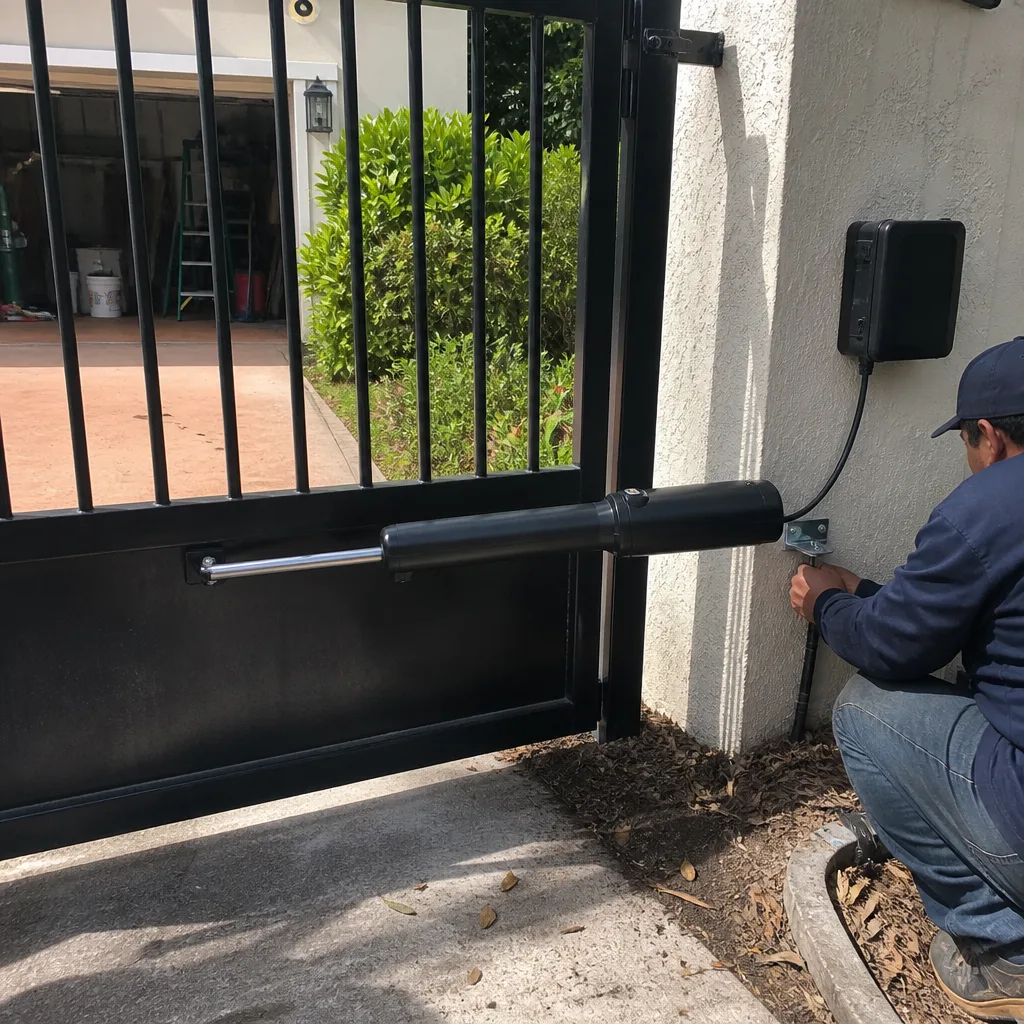
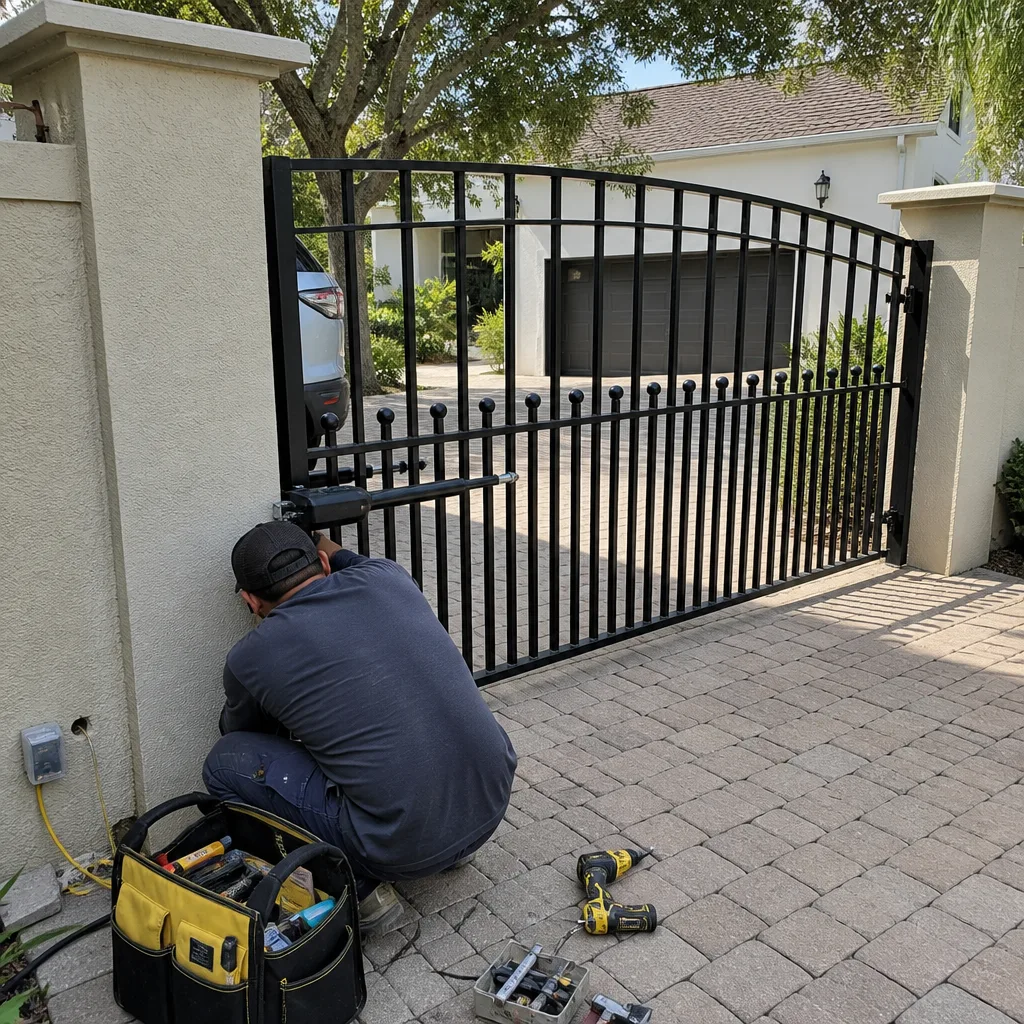
In permitting language, “like-for-like” means the new component performs the same function, fits in the same space, uses the same power source, and does not change the gate’s operation, footprint, or load on the structure. Swap a broken BFT control board for a new BFT control board of the same model series? That’s a repair. Swap a manual gate for a new Mighty Mule automatic opener? That’s an alteration, and it changes the gate from a passive structure to a powered system with electrical and safety code requirements.
Here’s how the line usually falls:
- No permit needed: Replacing a worn hinge with the same size and type, swapping a control board, installing a new battery in a solar opener, replacing a keypad, re-welding a cracked seam on the existing gate frame, replacing wheels on a slide gate that have failed but not resized.
- Permit likely needed: Adding a gate motor where none existed, changing from a chain-drive slide motor to a belt-drive, moving the gate to widen a driveway, changing swing direction, adding a pedestrian gate in a new opening, replacing a gate with one that’s heavier and requires a stronger post and foundation, or extending an automatic gate’s path closer to the street.
- Gray zone (check with the AHJ): Replacing a slide gate motor with one of equal horsepower but a different brand, such as going from a Linear to a Viking motor. Technically like-for-like in function, but some inspectors want the change documented because the mounting plate and safety sensor wiring change.
The easiest way to think about it: if the work changes what the gate does, how it moves, what powers it, or where it sits, you are probably outside the like-for-like exemption. When we do Gate Motor Repair in Orlando, we tell the homeowner before work starts whether we believe the job is repair or alteration, and we recommend the permit path accordingly. The written price we give always matches the work we describe.
When You Definitely Need a Permit
The following scenarios almost always require a permit in Orlando and Orange County, regardless of what a contractor tells you. If a contractor says otherwise, ask them to put it in writing and reference the specific code section they’re relying on.
- Adding automation to a manual gate: This converts the gate into a powered system subject to UL 325 safety standards, which means obstruction sensors, force settings, and a manual release. The electrical run alone, trenching from the house to the gate, typically requires an electrical permit.
- Changing the gate’s footprint: Widening a driveway gate, adding a second leaf, or relocating the gate posts means the structural loads change. New footings may be needed, and footings are structural work under FBC.
- Replacing a gate with a heavier one: A wrought iron gate that weighs 400 pounds replaced with a solid steel gate that weighs 700 pounds changes the load on the posts, the motor, and the foundation. The old motor may be undersized for the new gate, which is how openers burn out in six months.
- Running new electrical lines to the gate: Any new branch circuit, conduit run, or panel tap requires an electrical permit, even if the gate itself is unchanged.
- Adding a pedestrian gate next to a driveway gate: This alters the fence line and the egress path, and if the pedestrian gate is less than required egress width, it won’t pass inspection.
- Any work in a flood zone or historic district: Parts of Orlando, including some lakefront neighborhoods, sit in FEMA flood zones where even fence and gate alterations trigger review. Historic districts like Lake Eola Heights have their own design review layer.
If you plan to pull the permit yourself, the process in Orlando generally looks like this: create an account on the City of Orlando permitting portal, fill out the residential alteration application, upload a site sketch showing the gate location and dimensions, list the gate motor specifications, pay the permit fee, complete the work, then call for inspection. The inspector will verify the gate meets FBC 1008, the electrical is properly grounded and bonded, and the safety sensors reverse properly. For most homeowners, the hardest part is the site sketch and the motor spec sheet, which is why many choose to let the gate contractor handle the permit application as part of the job.
How HOA Rules Stack on Top of Florida Code
Florida Building Code sets the minimum safety standard. Your HOA sets the aesthetic and setback rules. In Orlando, especially in planned communities like Baldwin Park, Avalon Park, Lake Nona, and MetroWest, the HOA’s ARC (Architectural Review Committee) often has requirements stricter than the city’s. An HOA may prohibit certain gate styles, require the gate to match the fence, or ban slide gates in favor of swing gates. Some require the gate motor and battery box to be screened with landscaping.
What catches people off guard is that HOA approval is a separate process from a city permit, and neither one covers the other. A city permit proves code compliance. HOA approval proves the community’s design rules are satisfied. You typically need both for any visible gate change. We’ve seen Orlando homeowners complete a permitted gate installation, only to receive a violation letter from the HOA because the gate color didn’t match the approved palette. The fix cost more than the gate.
Before you start any gate project, do these three things in order:
- Check your HOA covenants for gate and fence language. Look for terms like “automatic gate,” “driveway gate,” “visibility,” “setback,” and “ARC approval.”
- File the ARC application with a photo of the existing gate, a rendering or catalog cut sheet of the proposed gate, and the motor specifications.
- Apply for the city permit only after HOA approval is in hand. The permit application will ask if other approvals are required, and lying on a permit application is a bad idea.
If the gate is purely a repair, like replacing a broken hinge or a failed control board, HOA approval is usually not needed. The HOA governs what the gate looks like, not whether it works. But if the repair involves changing the gate’s appearance, size, or color, the HOA wants to know first.
How to Verify a Contractor Pulled a Permit
Here’s the step-by-step process for verifying a permit in Orlando and Orange County. This takes about ten minutes and it’s the single best protection against unpermitted work surfacing at closing.
If your property is in the City of Orlando:
- Go to the City of Orlando’s online permit search page.
- Enter your property address. Do not search by owner name; the address is the reliable key.
- Look under “Open Permits” and “Closed Permits.” An open permit means it’s been issued but the final inspection hasn’t been completed. A closed permit means the inspection passed and the permit is finalized.
- Find the permit number for your gate job. The description should say something like “residential alteration – gate” or “electrical – gate automation.”
- If a permit was issued but never closed, call the permitting office and ask what’s needed to close it. That usually means scheduling the final inspection.
If your property is in unincorporated Orange County:
- Go to Orange County’s e-permitting portal.
- Search by address under the “Permit Search” or “Building” tab.
- Look for the permit type. Orange County uses categories like “Building – Residential Alteration” and “Electrical – Residential.”
- Check the status. “Issued” means work can begin. “Finaled” or “Closed” means the inspection is done.
- If no permit shows up and the contractor told you one was pulled, ask for the permit number and the date of issue. If they can’t produce it within a day, that’s a red flag.
A legitimate contractor will give you the permit number without hesitation. At Warden Gate Repair Orlando, the written price we provide before work starts includes any applicable permit line item, and we walk the homeowner through exactly what the permit covers. For how to hire a gate repair contractor in Orlando, see our step-by-step guide. There’s no guesswork after the fact.
Unpermitted Gate Work and Home Sales: The Fix Before You List
Here’s how unpermitted gate work typically surfaces during a sale: the buyer’s inspector sees a new automatic gate, notes it’s not on the county property record as a permitted improvement, and flags it. The title company then asks the seller to provide the permit or disclose the unpermitted condition. At that point, the seller is negotiating from a weak position. The buyer can demand a credit, a price reduction, or a full remediation before closing. A gate motor replacement that cost $800 can become a $4,000 concession by the time you factor in the retroactive permit fee, the inspection, any code corrections, and the hard-dollar concession to keep the deal alive.
Remediating unpermitted work before listing is almost always cheaper than resolving it during escrow. The process looks like this:
- Hire a licensed electrical contractor or gate specialist to inspect the existing work and determine what’s code-compliant and what’s not.
- Fix any safety defects first: missing obstruction sensors, a frozen manual release, improper grounding, an undersized circuit. These are the items an inspector will fail anyway.
- Apply for an “after-the-fact” or “retroactive” permit: Both Orlando and Orange County have provisions for this. Expect to pay a higher fee than a standard permit, often double.
- Complete any corrections the inspector requires: The retroactive permit inspection is usually more thorough than a standard one, because the inspector knows the work was done outside the process.
- Get the permit closed and finaled: Request a copy for your records and hand it to the title company as soon as you list.
If the gate work is genuinely minor, like a like-for-like control board swap that didn’t need a permit at all, you usually don’t need to do anything. The title company just wants documentation showing the work fell under the exemption. A letter from a licensed gate contractor stating the work was like-for-like repair is often enough. For larger unpermitted work, the retroactive permit path is the only clean way out. Getting the permit before you list gives you time to fix problems at contractor pricing, not rush pricing. If you’re planning to sell in the next year, have the gate inspected now. Warden Gate Repair Orlando sees this exact scenario every month in Orlando, and the sellers who check early always come out ahead of the ones who wait for the buyer’s inspector to find it first. Learn the gate repair warning signs every Orlando homeowner should watch for.
Common Mistakes to Avoid
- Trusting a contractor who says “we don’t need a permit for this” without checking. Some contractors say it because they don’t want to wait for an inspection. The right answer is always to verify with the city or county directly. A ten-minute phone call to the permitting office answers the question definitively.
- Assuming a gate motor replacement is always a repair. A like-for-like swap of the same brand and model is a repair. Changing brands, horsepower, or mounting configuration is an alteration. The distinction determines whether the work needed a permit, and guessing wrong has consequences at closing.
- Skipping the HOA approval because the city permit was approved. The city doesn’t enforce your HOA covenants. In Orlando neighborhoods like Baldwin Park and Lake Nona, the HOA’s design rules are often stricter than city code, and the HOA fine can exceed the permit fee.
- Pulling the permit yourself but never calling for the final inspection. An open permit on the property record is almost as bad as no permit at all during a sale. It tells the title company the work was never verified. Always schedule the final inspection and get the permit closed.
- Buying a gate motor online and having a handyman install it. Gate automation involves line-voltage wiring, ground-fault protection, and UL 325 safety standards. A handyman without electrical licensing can’t legally pull the permit, and the homeowner absorbs the liability. Electric Gate Repair in Orlando is specialized work for a reason.
- Ignoring the safety sensor requirements because the gate “works fine.” A gate that reverses on contact instead of sensing obstruction is dangerous. It’s also a code violation. FBC requires a functioning obstruction sensor, and if a child or pet is injured, working without it is indefensible.
When to Call a Professional
Call a licensed gate specialist if your gate has automatic operation and any of these apply: the motor is being replaced with a different brand or horsepower, the gate posts are loose or rusted through at the base, the safety sensor fails to reverse the gate when tested, the manual release won’t budge, or you’re planning to sell the home and need the gate’s permit history verified. High-tension springs, heavy gate leaves, and line-voltage electrical work are not DIY projects. A gate leaf that comes off its track can cause serious injury, and a gate motor wired incorrectly can energize the gate frame itself. We recommend professional handling for any job involving those components. Browse our more guides & resources for additional homeowner tips. Warden Gate Repair Orlando offers free estimates in Orlando; call (321) 465-7089 for a written price before any work starts, with a tech’s name and photo sent before the visit.
Frequently Asked Questions
It depends on whether the swap is like-for-like. Replacing a motor with the same brand, model, and horsepower is a repair and generally doesn’t need a permit. Changing brands, horsepower, voltage, or the mounting configuration makes it an alteration, and the City of Orlando or Orange County will typically want a permit. Call (321) 465-7089 for a free evaluation, and we’ll tell you which category your job falls into before any work begins.
A gate automation permit in Orlando typically falls in the $150 to $400 range depending on scope, not including the inspection fee. A retroactive permit, pulled after work is already done, often costs double. The exact number depends on whether the permit is City of Orlando or Orange County, and whether electrical work is included. We include the permit fee as a line item in every written price we give.
The buyer’s inspector or the title company can flag the unpermitted work during the sale, and you’ll likely negotiate a credit or reduction to keep the deal alive. Remediating before listing usually costs less and removes the rush. A $800 unpermitted gate motor replacement can become a $4,000 concession at closing once retroactive fees, inspection corrections, and the buyer’s credit are added up.
Like-for-like means the new part performs the same function, fits in the same space, uses the same power source, and changes nothing about the gate’s footprint, weight, or operation. Swapping a failed BFT control board for a new BFT board of the same series is like-for-like. Adding automation to a manual gate is not. The distinction determines whether a permit is needed.
Pure repairs that don’t change the gate’s appearance, size, or color usually don’t need HOA approval. But any visible change including a new gate, a new color, a different style, or a motor box mounted in a new location likely requires ARC approval. HOA approval and city permitting are separate tracks, and you need both for most visible gate projects in planned Orlando communities.
Yes. Search your address on the City of Orlando permit portal if you’re inside city limits, or the Orange County e-permitting portal if you’re in unincorporated areas. Look for a permit with a description matching your gate work and verify the status is “closed” or “finaled.” If no permit appears and a contractor claimed one was pulled, ask for the permit number and issue date. Call (321) 465-7089 if you’d like help navigating the lookup process.
The Bottom Line
Florida gate permitting comes down to one question: did the work change what the gate does, how it moves, what powers it, or where it sits? If the answer is yes, you probably need a permit in Orlando, and you’ll be glad you pulled it when you sell. If the answer is no, document the like-for-like repair so a title company never has reason to flag it. Check your HOA rules separately from your city permit, and verify any contractor’s permit claim yourself through the portal. The entire point of the warden name is watching over the gate and the people behind it. That’s why we put the permit question in front of every customer before work starts, with a written price and no surprises after the fact. Warden Gate Repair Orlando home is here for free estimates at (321) 465-7089.
Written by Cole Rafferty, Owner at Warden Gate Repair Orlando, serving Orlando since 2008.
See the difference
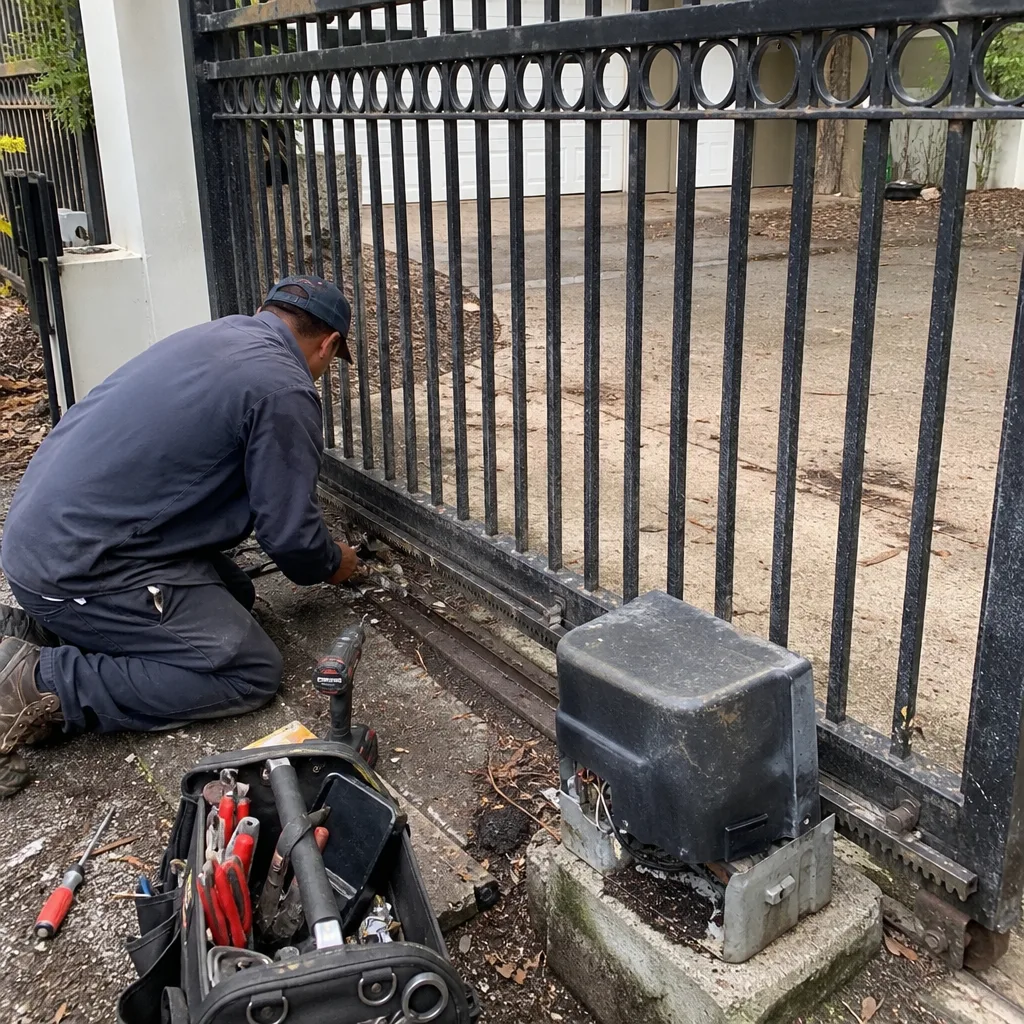 Before
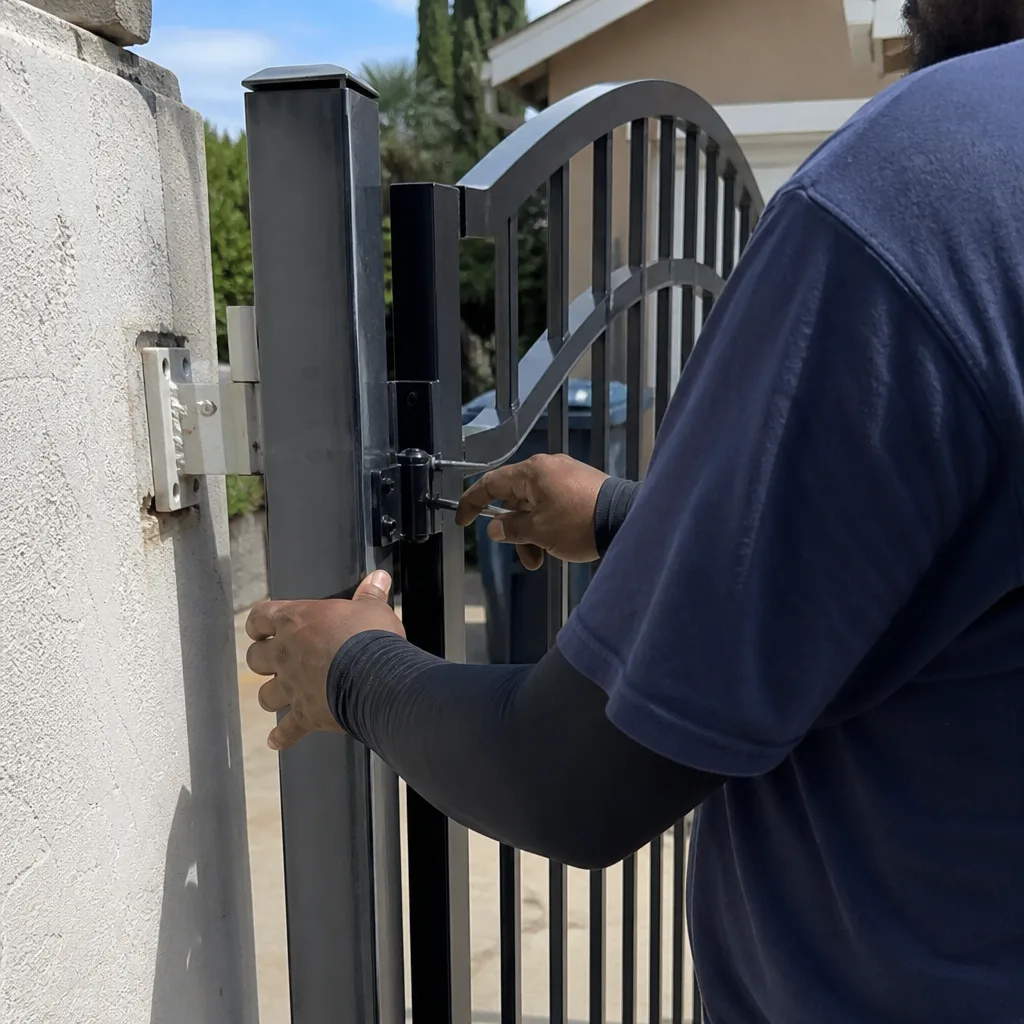 After
After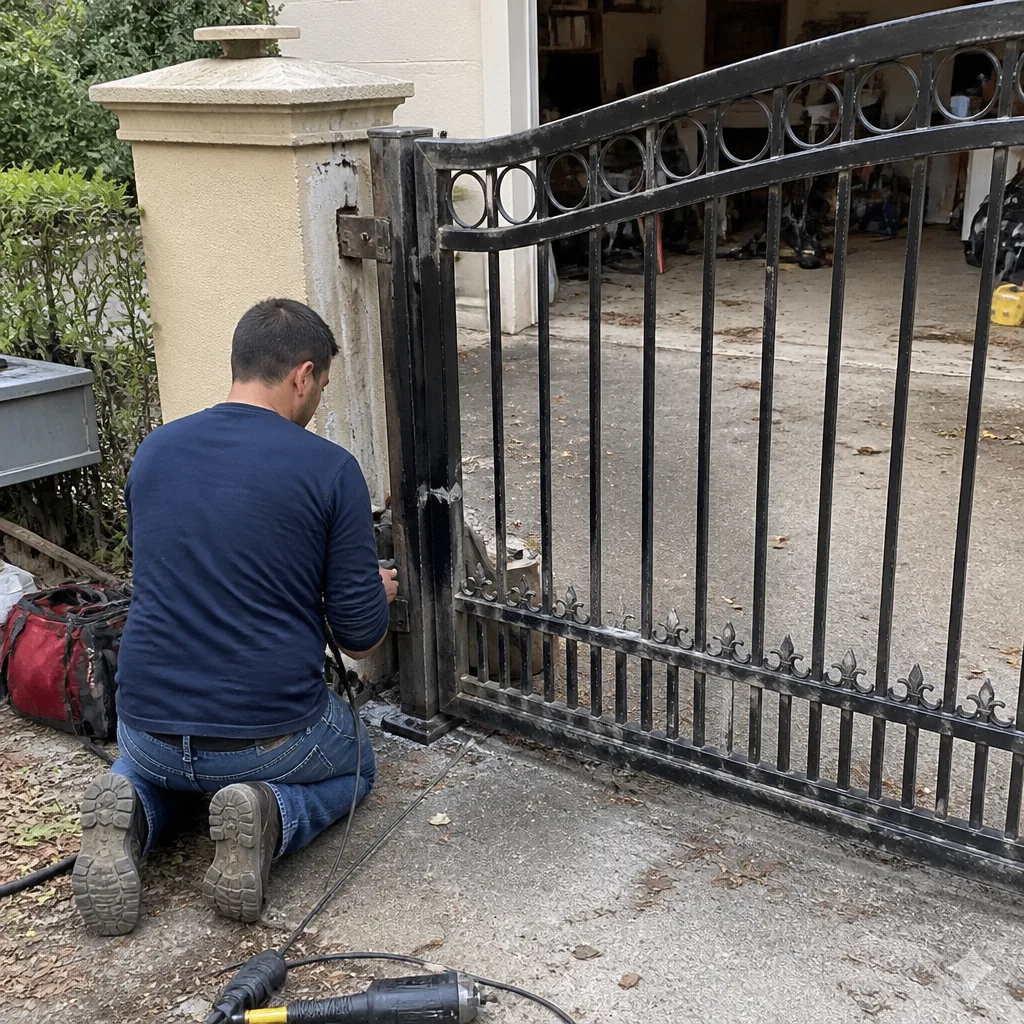 Before
 After
After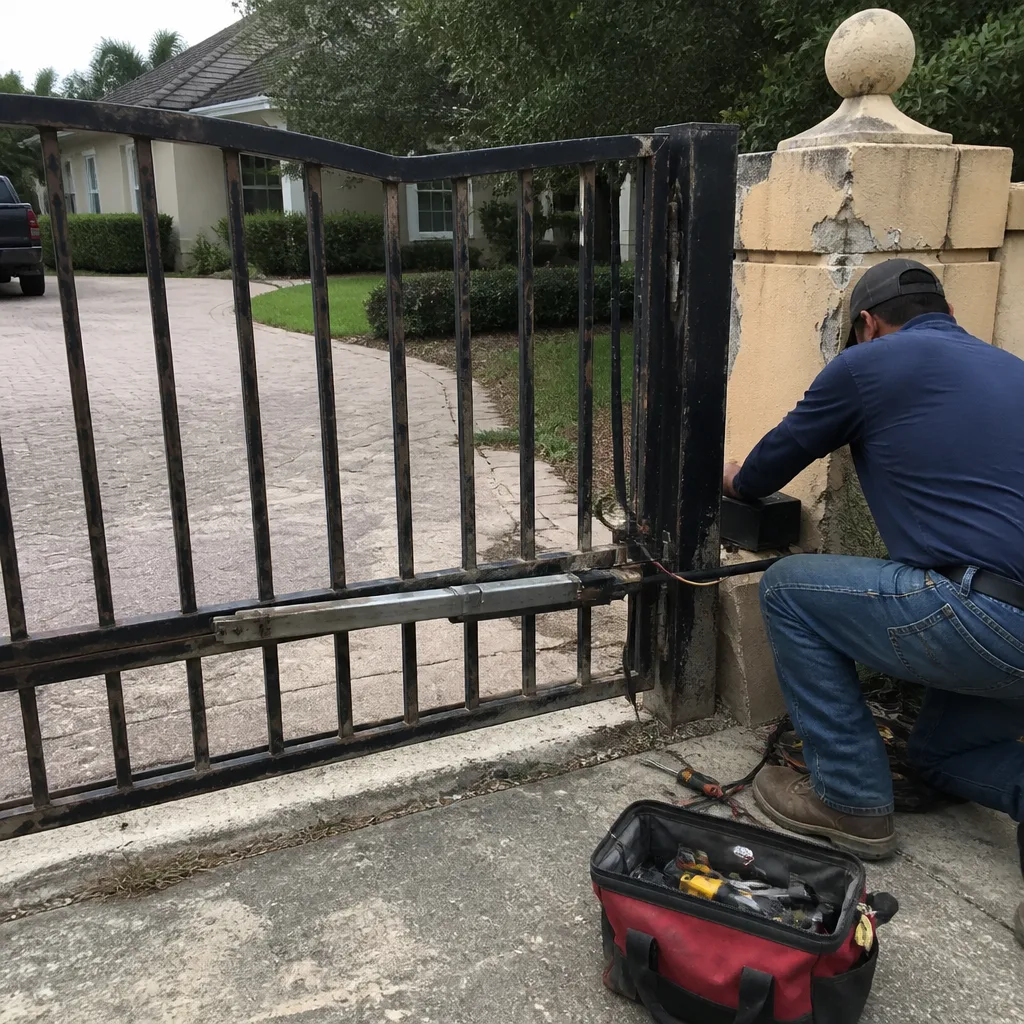 Before
 After
After