
Last updated October 16, 2026
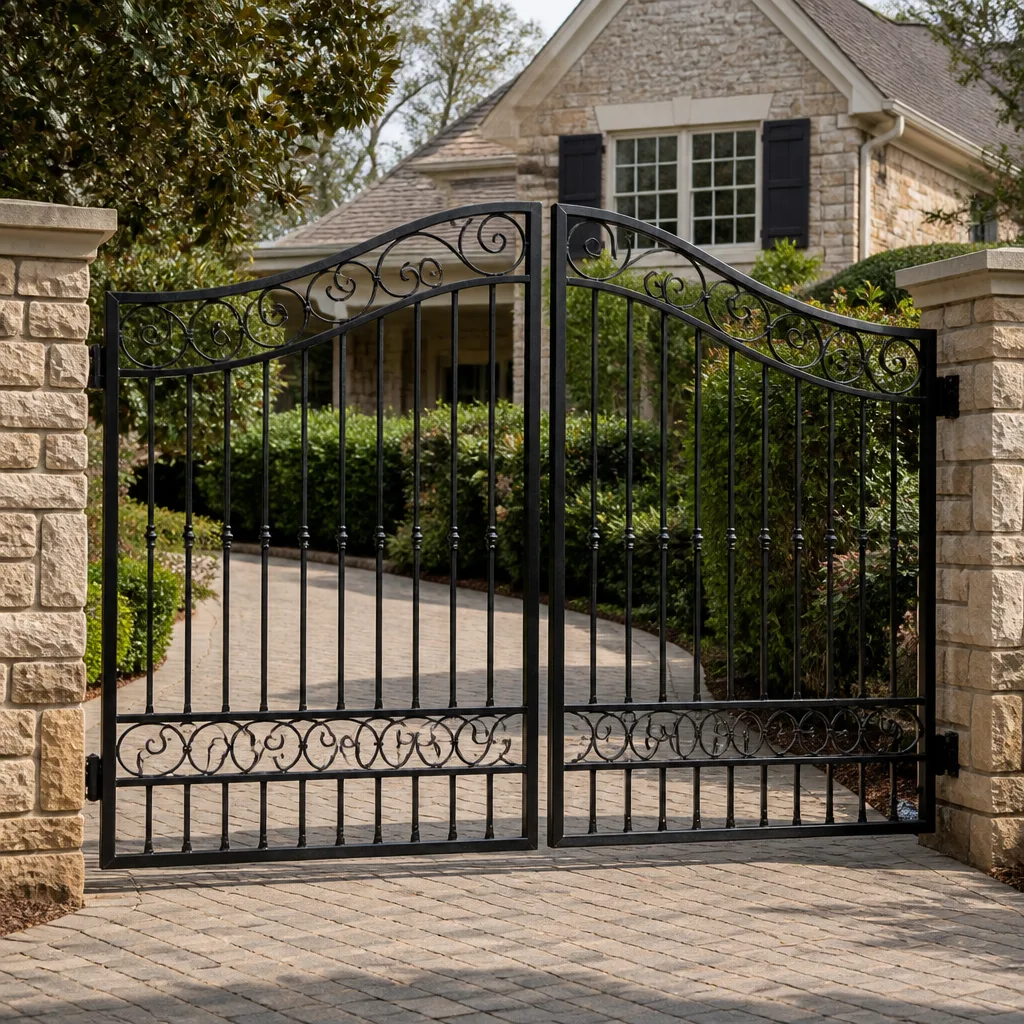 Wrought iron
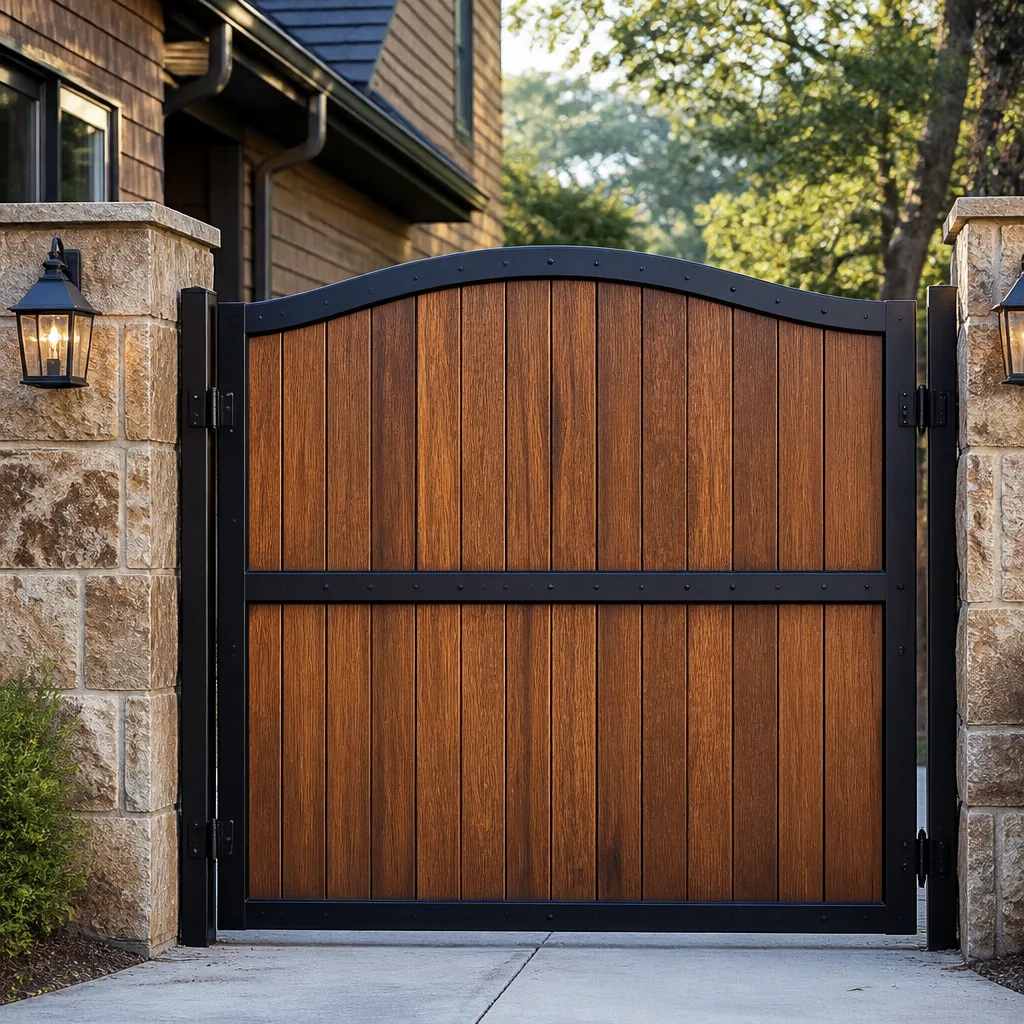 Wood & steel frame
 Farm & ranch
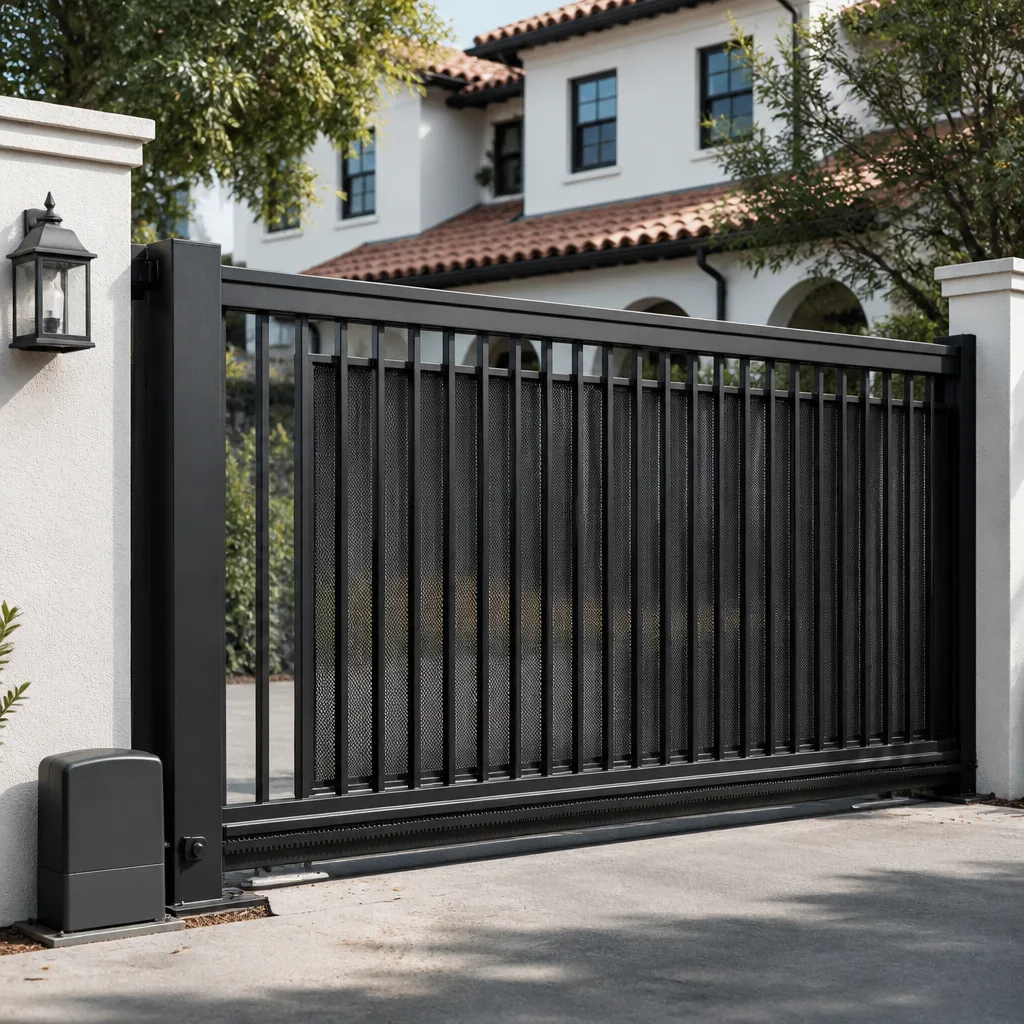 Sliding driveway gates
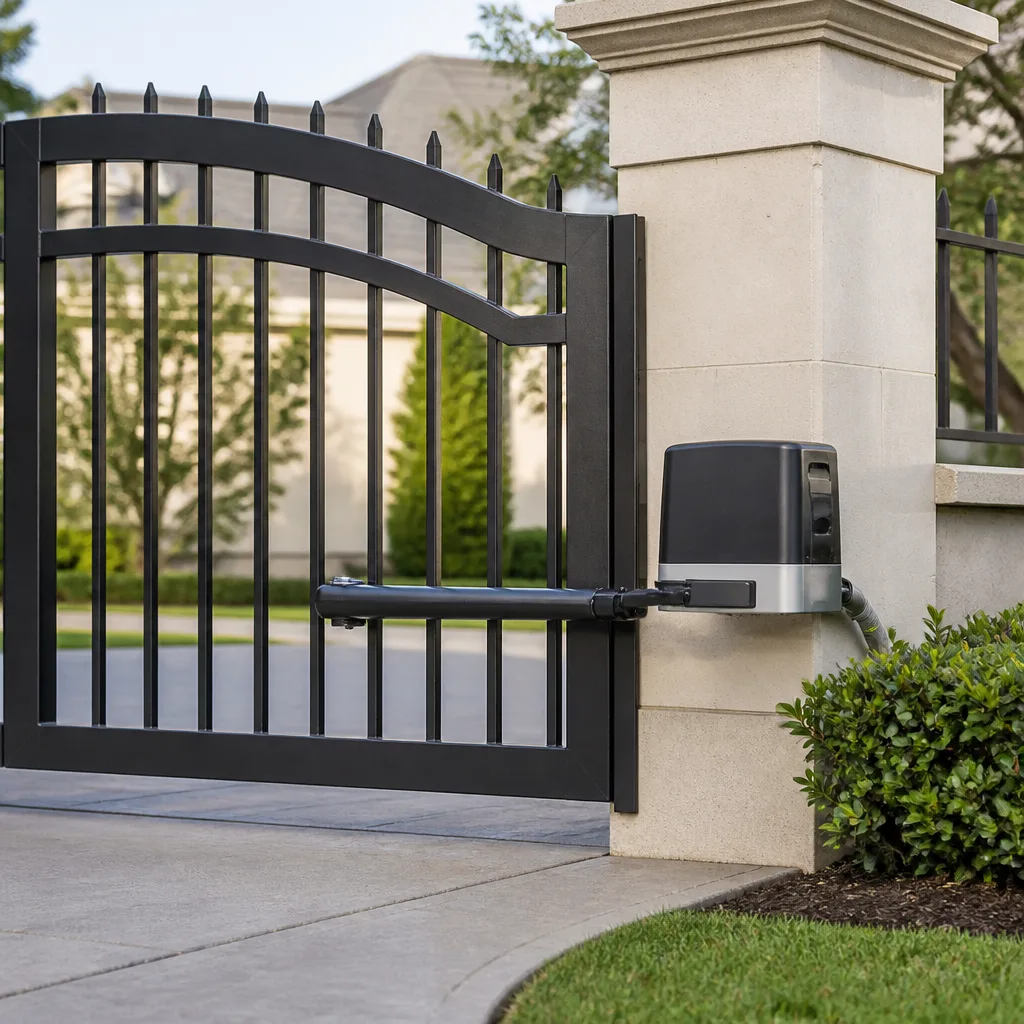 LiftMaster operators
Free on-site gate assessment - hinges, posts, and your LiftMaster or Nice gate operator checked before anything is quoted
The assessment is free and the quote is the invoice.
Get your free estimateGate Repair Warning Signs: A Orlando Homeowner’s Reference Guide
A gate that hesitates for two seconds before moving isn’t “warming up.” It’s showing early capacitor failure, and in Orlando’s heat and humidity, that two-second pause becomes a dead gate within 60 to 90 days if ignored. Most gate breakdowns in Orlando don’t happen suddenly. They happen slowly, with warning signs that get dismissed as quirks because nobody ever told the homeowner what abnormal actually sounds like, looks like, and feels like on a Florida gate system. This guide changes that, and you can find more guides & resources on our blog. By the time you finish reading, you’ll know exactly what to listen for, what to watch on your control board, and which warning signs mean “call tomorrow” versus “call tonight.”
Quick Answer
Gate repair warning signs in Orlando fall into four categories: hesitation before movement, new or changing sounds, control board LED patterns that don’t match normal operation, and intermittent failure that worsens with humidity. A homeowner who catches these signs early typically pays $85 to $200 for a component repair like a capacitor, hinge, or sensor replacement, versus $550 to $1,200 for a full motor or control board replacement after total failure. If your gate pauses, grinds, or trips its breaker more than twice in a week, the system is telling you something specific.
Styles & brands we work with
Table of Contents
- Auditory Warning Signs: What Your Gate Is Telling You
- Visual Warning Signs on the Control Board: LED Blink Codes Decoded
- The Intermittent Failure Pattern: Why Orlando Humidity Kills Control Boards
- Warning Signs Specific to Solar-Powered Gates in Orlando
- How to Document Warning Signs with Your Phone
- Common Mistakes to Avoid
- When to Call a Professional
- Frequently Asked Questions
Key Takeaways
- A gate that pauses before moving is showing capacitor failure, not “warming up.”
- Control board LED blink codes are readable without opening the housing, and they identify the exact fault on most major brands.
- Intermittent failures in humid climates like Orlando are almost always early control board corrosion, not a fluke.
- Solar gate issues often look like motor problems but are actually panel output drops from shade, dirt, or aging batteries.
- A 30-second phone video taken before you call can often let a technician diagnose the fault remotely and bring the right part on the first trip.
Auditory Warning Signs: What Your Gate Is Telling You
Every gate makes noise. The question is whether the noise has changed. We’ve learned over years of gate repair in Orlando that homeowners notice sounds weeks or months before they notice movement problems, but they don’t act because they assume the noise is part of normal aging. It usually isn’t. Each component fails with a signature sound, and learning to match the sound to the component means you can tell a technician exactly what’s happening before they arrive.
Here’s what we listen for when a customer calls about a noise, matched to what it usually means on the gates we service across Orlando:
- A grinding or crunching sound during movement points to a worn drive gear, especially on chain-driven slide gates. The gear teeth wear unevenly over years of heat cycles, and once one tooth goes, the rest follow within weeks. This is the most common “sudden” failure we see, and it was never actually sudden.
- A humming sound with no movement is a capacitor that has failed completely. The motor is receiving power but can’t start. If you hear this, stop pressing the opener button. Repeated attempts can overheat the motor and turn a $120 capacitor replacement into a $600 motor replacement.
- A high-pitched squeal when the gate starts moving indicates metal-on-metal contact, usually a hinge or wheel bearing that has lost lubrication or worn through its bushing. In Orlando’s humidity, what starts as a lubrication issue accelerates into a corrosion issue within a season.
- A rhythmic clicking during movement often means something is catching, a bent track section, a wheel with a flat spot, or debris lodged in the rack. This is one of the few sounds that sometimes resolves with cleaning, but if the clicking continues after clearing the track, the wheel or rack is already damaged.
- A thumping or knocking at the end of travel means the limit switches aren’t stopping the gate at the right point. The gate is slamming into its end stops. Every slam stresses the motor mount, the rack, and the welds. We see this most on BFT and Linear systems that were installed before the current owner bought the home and never adjusted.
The key distinction is whether a sound is new or has always been there. A gate that has clicked since installation is probably fine. A gate that started grinding three weeks ago is not. If you can’t remember when you first noticed the sound, it’s new enough to matter.
Visual Warning Signs on the Control Board: LED Blink Codes Decoded
Most Orlando homeowners never open their gate control board housing, and that’s appropriate. But you don’t need to open anything to read the diagnostic LEDs. On many gate opener brands, a small status light is visible through a window or through the gap around the control box cover, and that light tells you exactly what the system thinks is wrong.
Here are the blink patterns we check most often on gates in Orlando, and what they mean:
- Steady green light: Normal operation. The board has power and the system is ready.
- One blink, pause, repeat (on LiftMaster and Linear units): Photoelectric sensor interruption. Something is blocking the safety beam, or a sensor lens has gotten dirty. In Florida, spider webs and fine silt from summer storms are the usual culprits.
- Two blinks, pause, repeat (common on BFT and Viking boards): Motor fault or thermal overload. The system shut the motor down because it got too hot or drew too much current. If this happens after the gate has been cycling frequently on a hot afternoon, the motor may be undersized for the duty cycle.
- Three blinks, pause, repeat (Ghost Controls and many Chinese-manufactured boards): Limit switch error. The board can’t find the open or closed position. This often follows a power outage or a lightning strike near the property, both regular occurrences in Orlando.
- Rapid continuous blinking: Learning mode or programming error. On most boards, this means the system has lost its limits and needs to be re-taught, which a technician can do in about 15 minutes.
- No light at all when the unit should have power: Either the board is dead or the transformer is. This is the most expensive outcome if ignored, but the good news is that boards rarely die without showing earlier symptoms.
One detail worth noting for Orlando specifically: after afternoon thunderstorms, we get a wave of calls about gates that blink three times or won’t respond. Lightning doesn’t always kill a board directly. Sometimes it just scrambles the programming. If your gate acts strange after a storm, that diagnostic information helps our team choose between a reprogramming visit and a board replacement before we arrive. For more on what board-level failures look like on specific brands, our gate motor repair in Orlando page covers the components in more depth.
The Intermittent Failure Pattern: Why Orlando Humidity Kills Control Boards
Here’s a pattern we’ve seen hundreds of times in Orlando homes: a gate stops working once. The homeowner checks the breaker, presses the button again, and the gate works fine. A week later, it happens again. Then a few days later. Then it fails on a Tuesday afternoon and never works again. The homeowner calls us and says, “It’s been flaky for a while, but it always came back.”
The flakiness was the warning sign, and the board was already dying. What causes this in Florida more than anywhere else is moisture. Orlando’s humidity averages above 70% year-round, and during the summer it doesn’t drop below 80% at night. Warm, humid air gets pulled into the control board housing through the natural heating and cooling cycle of the electronics, then condenses on the circuit board when temperatures drop overnight. Over months, that condensation corrodes the solder joints and traces. The gate fails on the days when corrosion bridges a circuit; it “comes back” when conditions shift and the bridge temporarily breaks.
Here’s the sequence we tell every homeowner to watch for:
- First episode: Gate doesn’t respond to the remote or keypad. After a few minutes or a manual reconnect, it works again. Homeowner shrugs. This is usually the first corrosion or dryness event.
- Second episode within two weeks: Same thing, maybe with a longer delay before the gate recovers. The board’s power supply is now failing intermittently under heat.
- Board works in the morning but not in the afternoon: This is heat-related. The components expand and contract, and a cracked solder joint opens. Humidity accelerates the crack.
- Board works in the dry season and fails in the wet season: By the time this pattern appears, the board is one heavy rain event from total failure.
- Total failure: No lights, no clicks, no response. The board is done. Replacement is now a certainty, not a probability.
Most homeowners catch this at stage 2 or 3, which is good timing. A control board repair or replacement at that point is often half the cost of waiting until stage 5, when transformer and motor damage can follow a shorted board. If you’re noticing any of these early patterns, our electric gate repair in Orlando page explains what a board replacement involves and what to expect from a written quote.
Warning Signs Specific to Solar-Powered Gates in Orlando
Solar-powered gates in Orlando have a deceptive failure pattern: the symptoms look like motor problems, but the root cause is almost always in the power system. A solar gate that moves slowly, stops mid-travel, or won’t open at the end of a cloudy stretch usually doesn’t have a bad motor. It has a solar panel that’s producing less power than the system needs. This is the most commonly misdiagnosed issue we see, and it’s worth understanding before you call anyone.
Here are the specific warning signs and what they actually mean:
- Gate works fine in summer but slows down in winter: This is not a gate problem. Orlando’s shorter winter days mean the solar panel receives fewer hours of full-sun charging. If the battery bank was marginal before winter, it becomes insufficient. The panel itself may still be producing fine. The fix is often battery replacement or a panel upgrade, not motor work.
- Gate moves slower after a week of rain: The panel isn’t getting enough sun to fully recharge the batteries. In Orlando’s rainy season, this can accumulate over several days. If the gate still opens but noticeably slower, your batteries are telling you they’re at the edge of their capacity.
- Gate opens but won’t close, or closes but won’t open: This looks like a limit switch or sensor issue, but on solar chargers it’s often low battery voltage. The system has enough stored power for one travel direction and not the next. If this happens consistently in the morning before the panel has charged, it’s a power issue, not a mechanical one.
- Panel covered in dust, pollen, or bird droppings: In Orlando, oak pollen in spring and dust from summer construction combine on panels fast. A panel that’s 30% obstructed loses roughly 30% of its charging output. Cleaning the panel with a soft cloth and water once a quarter is the cheapest gate maintenance you’ll ever do.
- Batteries older than three years: Even the best solar gate batteries in Florida’s heat don’t last much beyond 3 to 5 years. Heat is the killer. If your gate has been through three Orlando summers and you’re seeing sluggish behavior, plan on battery replacement before the gate fails entirely.
One tip from our experience with solar gates across Orlando: if your solar gate fails completely, check the battery voltage before you call for motor service. A 12-volt deep-cycle battery reading under 10.5 volts under load is too low. A new battery is often under $200 installed and solves the “dead gate” completely. We’ve saved customers hundreds of dollars over the years by testing batteries before replacing motors. If you need help figuring out what’s actually failing, start with our gate repair in Orlando page for a full breakdown of what we check on the first visit.
How to Document Warning Signs with Your Phone
The single most effective thing you can do before calling for gate service in Orlando is to capture the problem on video. A 30-second clip of your gate’s abnormal behavior does more diagnostic work than a five-minute phone description. It tells the technician whether the issue is mechanical, electrical, or control-board related, and it often means we arrive with the right part on the first trip instead of needing a follow-up visit. Here’s how to shoot it.
- Set your phone to record before you trigger the gate. Start capturing, then press the opener. Don’t call the gate to you and then start filming. We need to see the full travel sequence from stationary to moving to stopping.
- Stand close enough that the audio matters. Your phone’s microphone is better than you think. Hold it at chest height, pointing at the gate motor or at the gate wheel area. The sound of a failing gear or a capacitor hum is diagnostic on its own.
- Film the gate opening and closing once, not more. One full cycle is enough. If the gate looks normal but sounds wrong, hold the clip for the full travel in both directions so we can hear where in the cycle the sound appears.
- Capture the control board lights if they’re visible. Without opening the housing, see if any LED is blinking. Film that for 10 seconds. The blink pattern is the system telling us what’s wrong in its own language.
- Note the conditions. When you send the video, include one line: “Shot at 7pm, cloudy, after a light rain” or “Shot at noon, sunny, 95 degrees.” Time of day and weather matter for solar, for breaker-related, and for heat-related failures in Orlando.
- Send it before you call, if possible. When you share a video with a technician before the visit, you skip most of the discovery phase. We usually know what’s wrong before we pull into the driveway.
If you take nothing else from this guide, take this: a phone video is the cheapest diagnostic tool ever invented. It costs you nothing, and it routinely saves homeowners a $75 to $150 diagnostic charge because the technician doesn’t need to spend an hour reproducing the problem in front of you.
Common Mistakes to Avoid
- Pressing the opener button repeatedly when the gate won’t move. Every press sends full voltage to a motor that isn’t turning. If the capacitor has failed, repeated attempts cook the motor windings. Press once. If it doesn’t respond, stop and call.
- Lubricating the gate with WD-40. WD-40 is a water displacer, not a gate lubricant. It washes out existing grease and leaves moving parts with less protection than they had before. Use white lithium grease on hinges and rollers, or ask us to do it during a service visit.
- Ignoring a power bill spike. A gate motor that’s drawing too much current because of a failing capacitor or worn gear will show up on your electric bill as $20 to $40 extra per month. That’s the cost of ignoring the real problem.
- Disconnecting the gate from power to “reset” the problem. Resetting a control board that’s flashing an error code erases the diagnostic information that tells us what’s wrong. If the gate works after a reset, fine, but text or call us with the video first so we know what it looked like before the reset.
- Waiting for the gate to fail completely before calling. Every Orlando gate professional can tell you stories of homeowners who waited through months of warning signs and then paid $800 for a failure that would have cost $150 to fix early. The warnings never improve.
- Letting unauthorized or unqualified people work on a gate while it’s under warranty. Opening the electrical housing of a gate motor without proper training voids the manufacturer’s warranty on most brands. If your gate is still under coverage, call the installer or a factory-authorized service provider.
- Putting off battery replacement on solar gates in summer. If the gate is sluggish in July, September won’t be easier. Heat degrades batteries faster than any other factor in Orlando. Replace them before hurricane season, not after.
When to Call a Professional
Some gate repairs are genuinely dangerous. Gate springs, high-tension cables, and motor capacitors all carry risk of injury if handled incorrectly. The capacitor alone stores an electrical charge even after power is disconnected, and a gate spring under tension can release hundreds of pounds of force in an instant. If your gate is making a new sound, not responding, showing a blinking control board, or moving sluggishly on solar power, call a trained technician for Gate Repair services rather than trying to diagnose it yourself. Safety is not the place to save money.
Here in Orlando, Warden Gate Repair Orlando offers free estimates and same-day service for most Orlando-area gate issues. Call (321) 465-7089 and we’ll ask for the video you shot, walk through what we think is happening, and give you a written price before any work begins. No surprises, no pressure, and a real person on the line every time you call. We specialize exclusively in gate repair, electric gate repair, and gate motor repair, and we service LiftMaster, FAAC, BFT, Linear, Viking, Ghost Controls, DoorKing, Elite, and Mighty Mule systems. Our technicians are background-checked, identity-verified, photo-badged, and you’ll see their name and photo before they arrive.
Frequently Asked Questions
A hesitation before movement is a capacitor failure in the making. The capacitor gives the motor its starting boost, and when it starts to fail, the motor struggles to overcome inertia. In Orlando’s heat, a failing capacitor typically dies completely within 60 to 90 days. Replacement is usually $85 to $150 installed. Call (321) 465-7089 for an exact quote; our estimates are free.
Most Orlando gate repairs run between $85 and $350. Simple fixes like capacitor replacement, hinge adjustment, or sensor cleaning fall at the low end. Motor replacement, control board replacement, or gear replacement can run $450 to $950. The written price is always given before any work starts, so you know exactly what you’re paying before you approve anything. Warden Gate Repair Orlando gives free, no-obligation quotes over the phone or in person.
Yes. Most component-level repairs, capacitor, sensor, limit switch, gear, or hinge work can be completed in one visit. Board replacements and motor replacements sometimes need a second visit if a part has to be ordered, but common boards and motors for the brands we service are usually in stock locally for Orlando-area customers. Call before 2pm for the fastest same-day dispatch.
Intermittent failure on a gate in Orlando is usually early control board corrosion from humidity. Moisture condenses on the circuit board nightly, corroding solder joints over time. The failure appears when conditions bridge a damaged circuit and disappears when conditions shift. Intermittent failure almost always becomes permanent, and the board is the most likely culprit.
Probably not. Sluggish solar gate movement in Orlando is more often low battery voltage, a dirty or shaded panel, or degraded wiring connections. The motor itself rarely fails without warning sounds. Test the battery voltage, clean the panel, and check for new shade from growing trees. If the gate still moves slowly after those checks, call us for a free diagnosis at (321) 465-7089.
We service and repair eight major gate opener brands across Orlando: LiftMaster, FAAC, BFT, Linear, Viking, Ghost Controls, DoorKing, Elite, and Mighty Mule. If your gate system uses one of these brands, we can access the parts and the service documentation immediately. The technicians who arrive at your door are factory-trained on these systems and have manufacturer-level diagnostic access.
The Bottom Line
A gate failure in Orlando rarely arrives without warning. The warnings are there in the sounds your gate makes, the hesitation before movement, the blinking lights on the control board, and the slow creep of a solar battery that can’t keep up with the heat. Learning to read those warnings means you catch a $100 capacitor before it becomes a $700 motor, and a corroding control board before it shorts completely. Document what you see and hear with your phone, check the LED when something changes, and don’t wait through the flakiness. Call Warden Gate Repair Orlando at (321) 465-7089, and we’ll help you turn a warning sign into a fix, not a failure.
Written by Cole Rafferty, Owner at Warden Gate Repair Orlando, serving Orlando since 2008.
See the difference
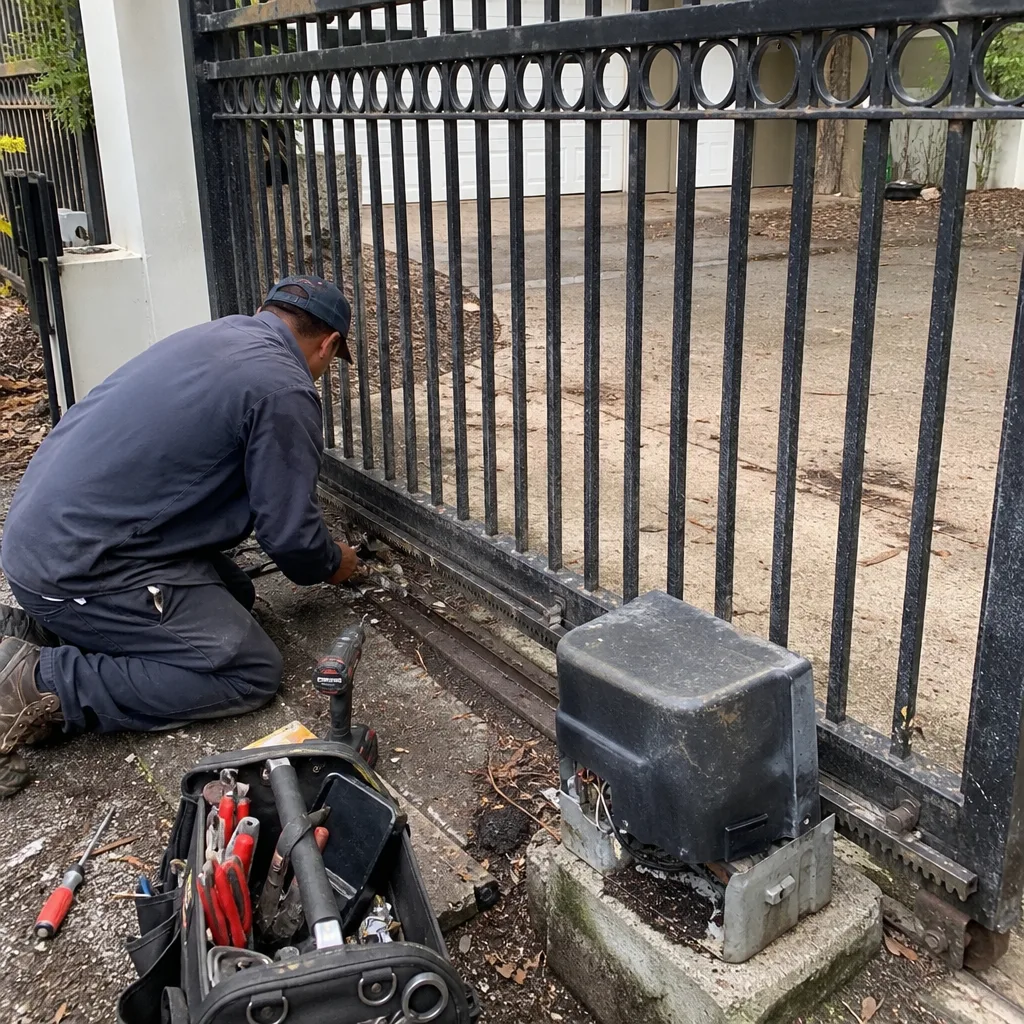 Before
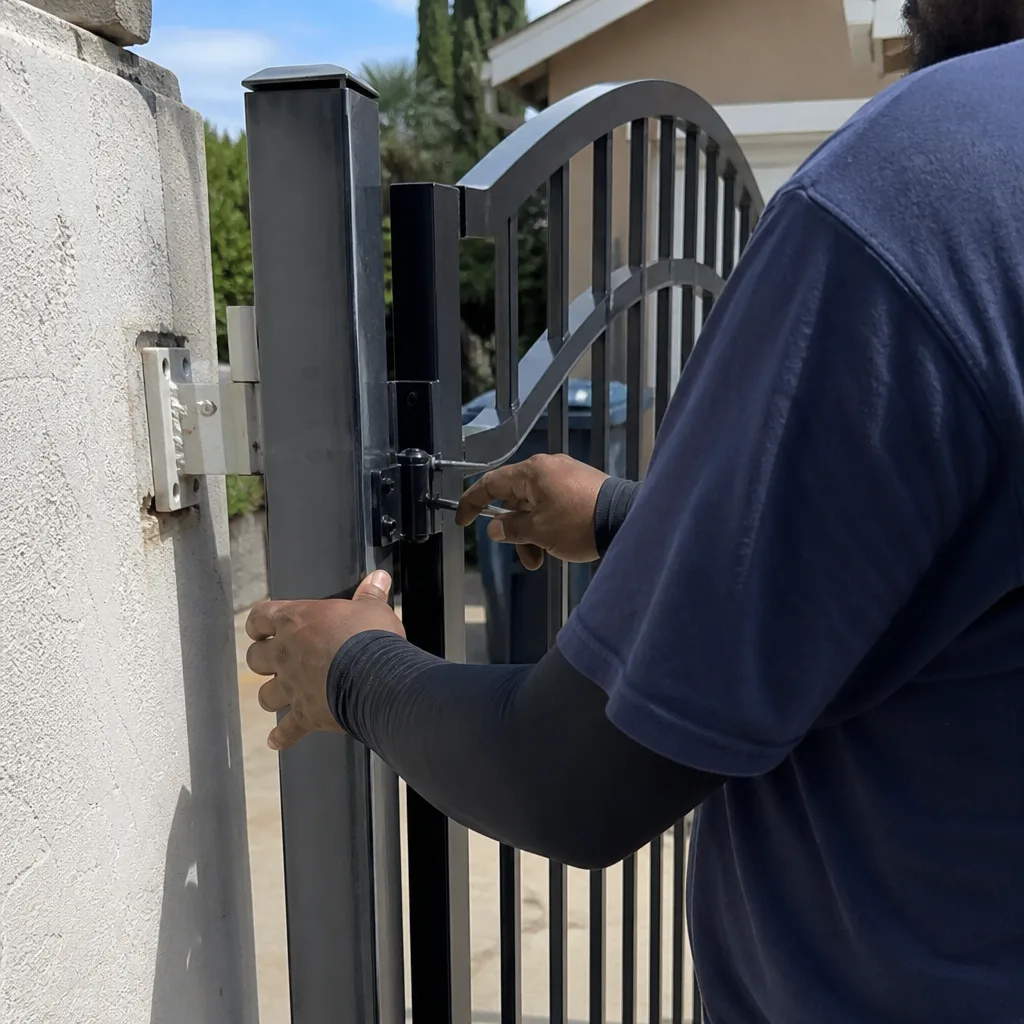 After
After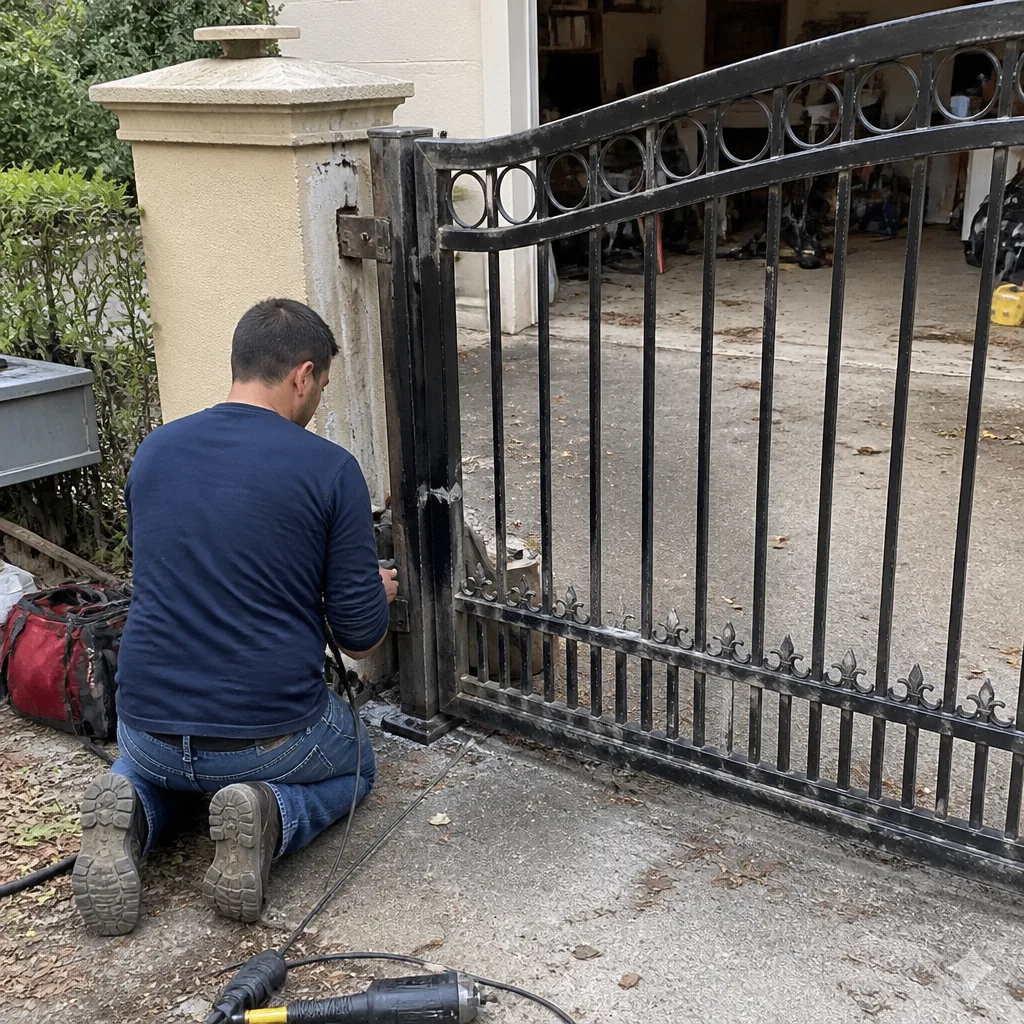 Before
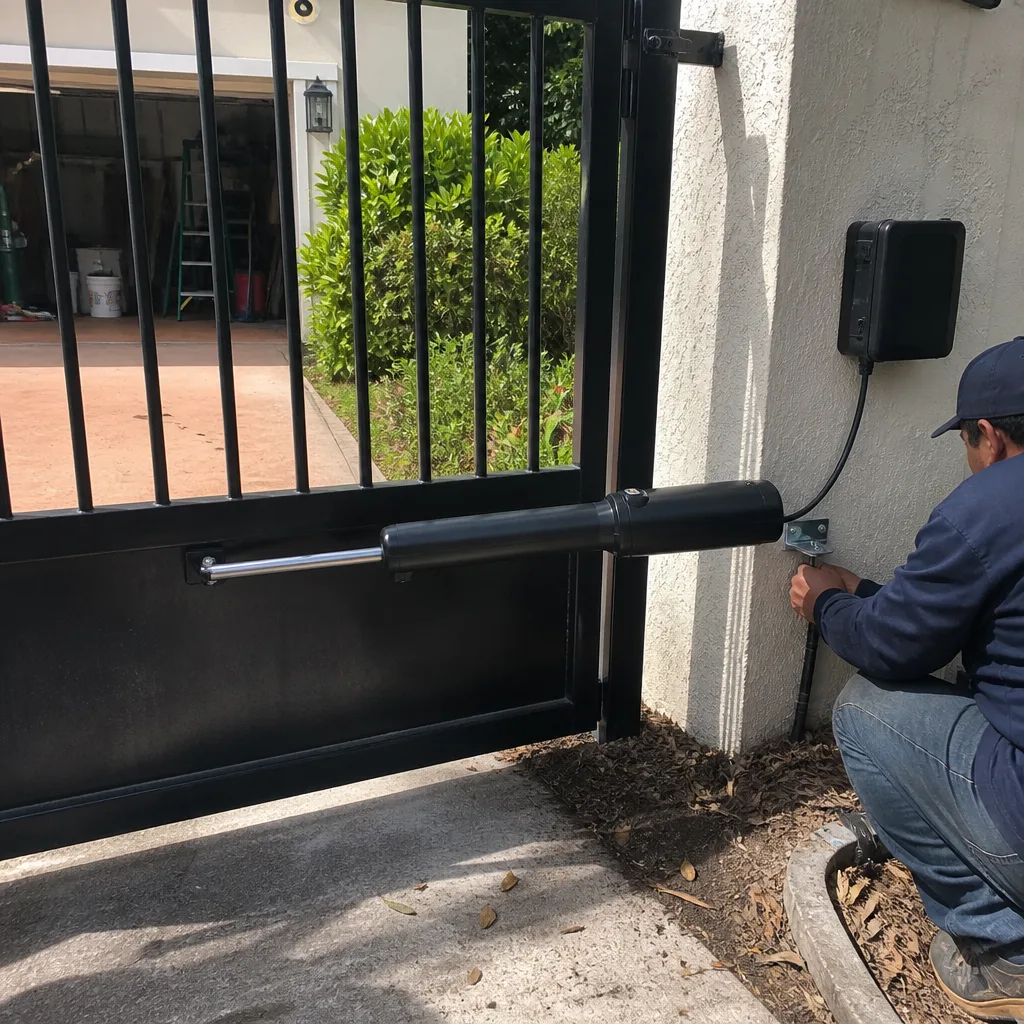 After
After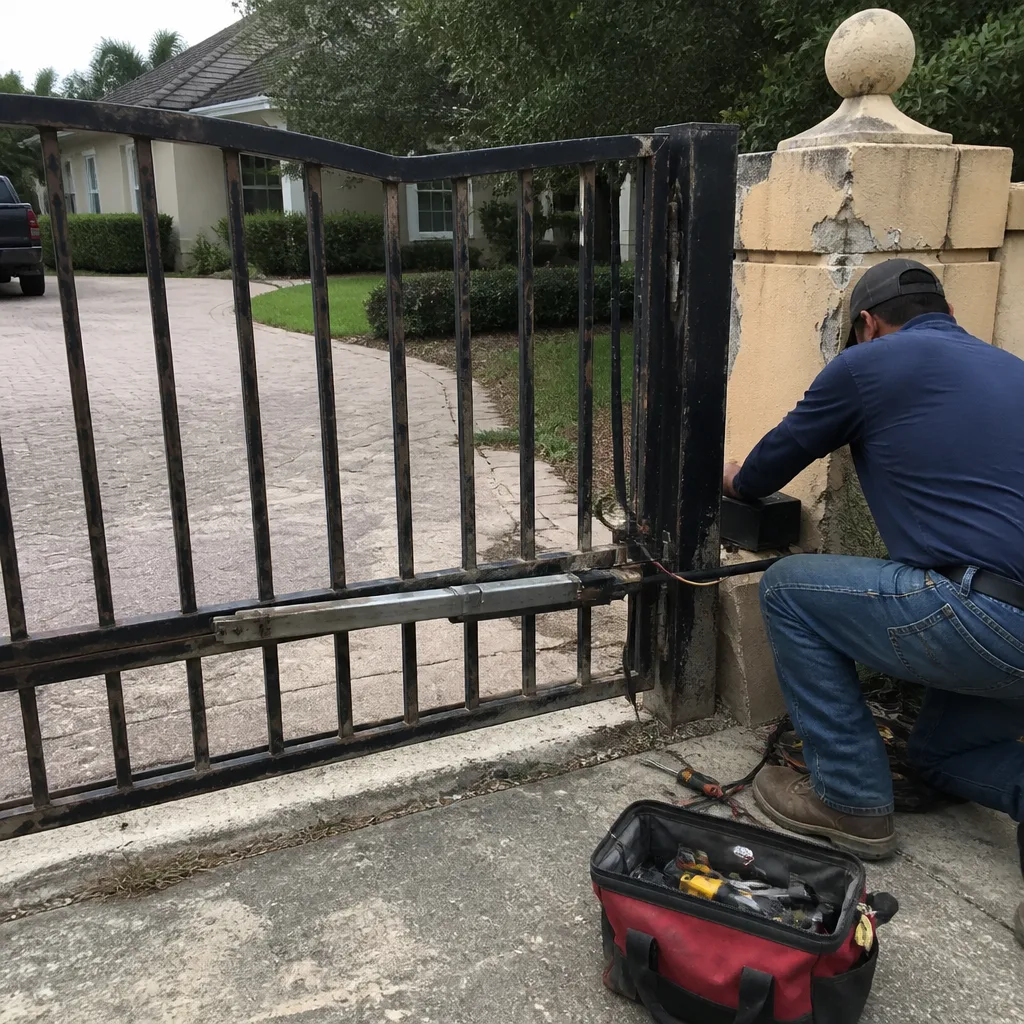 Before
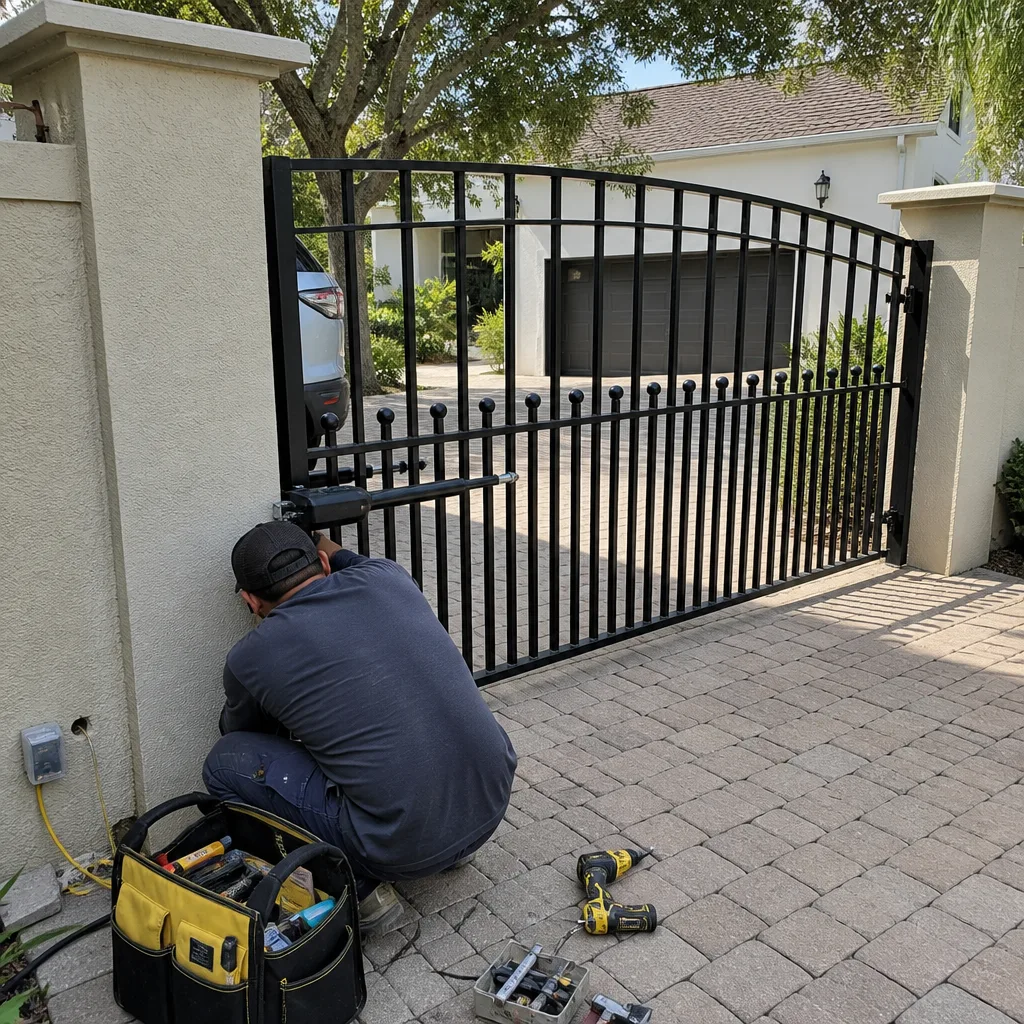 After
After