
Last updated October 16, 2026
 Wrought iron
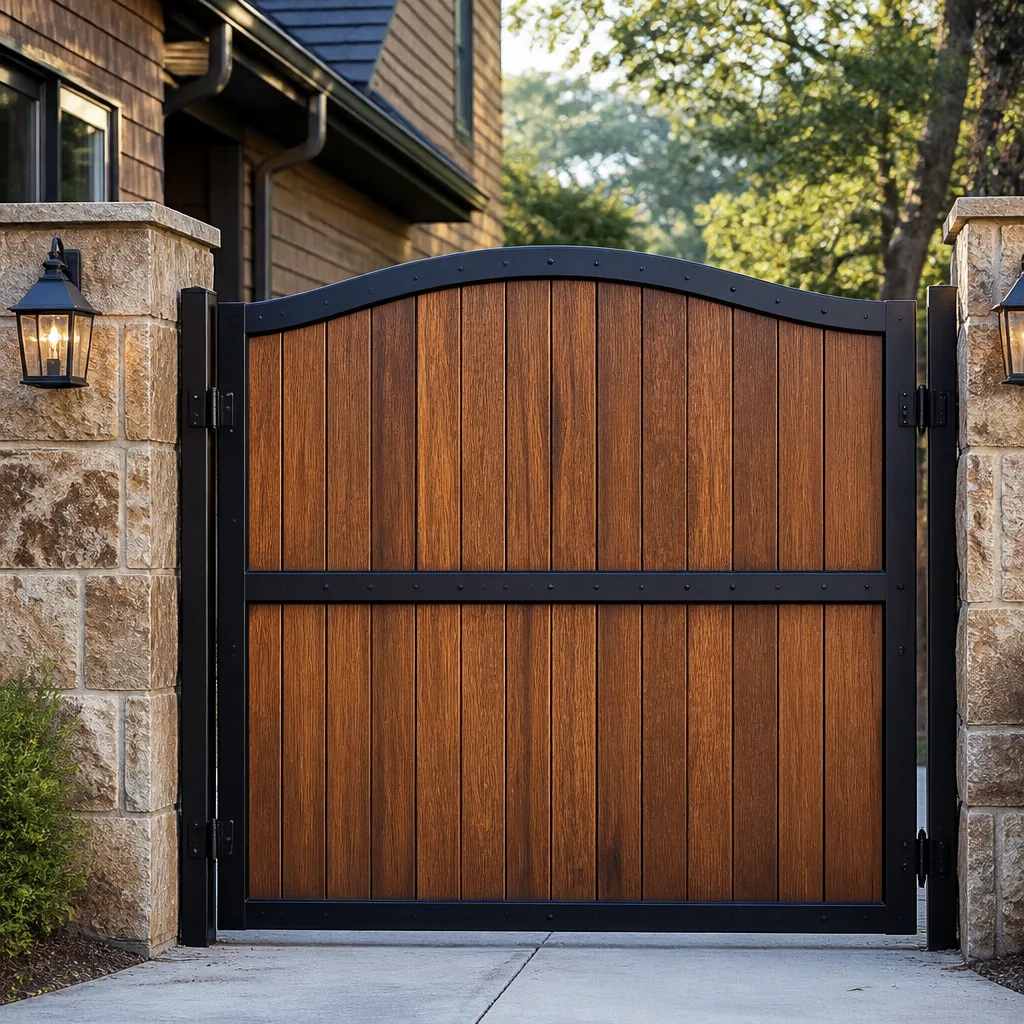 Wood & steel frame
 Farm & ranch
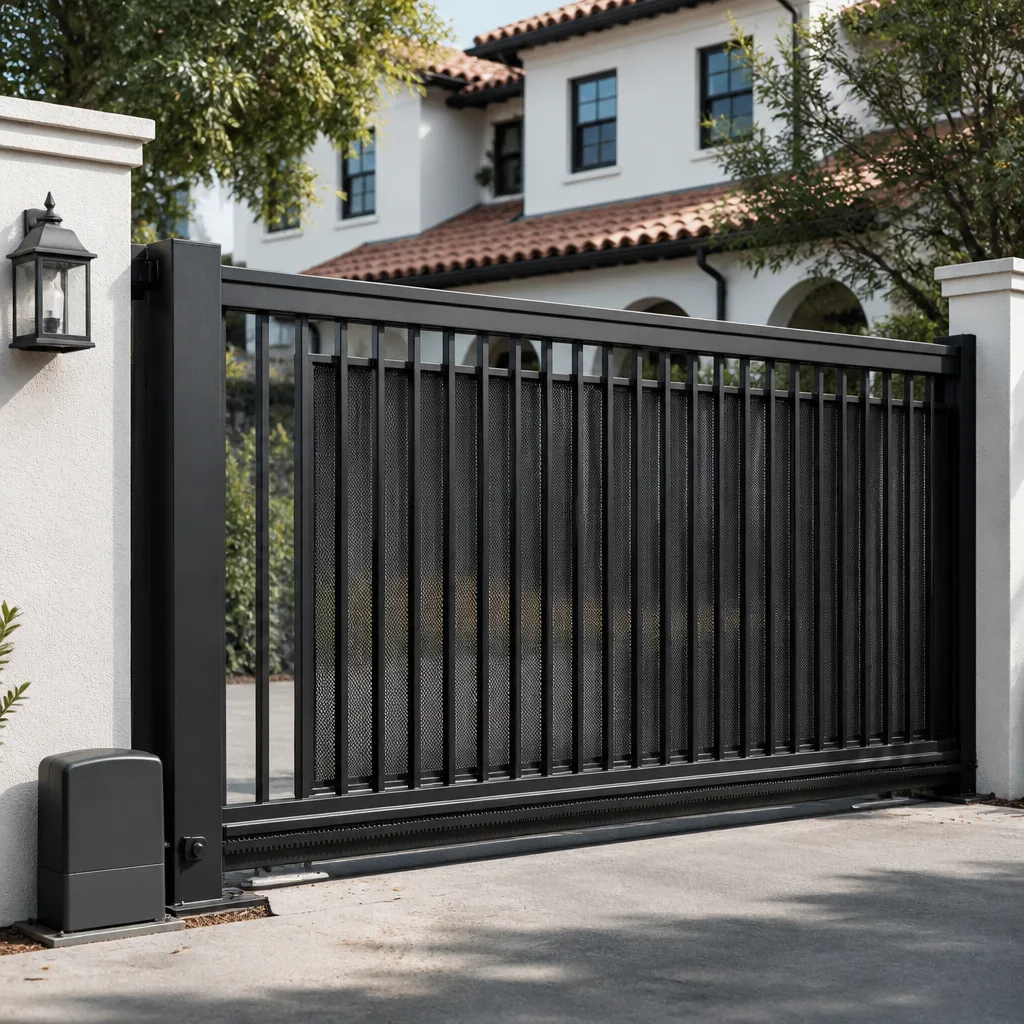 Sliding driveway gates
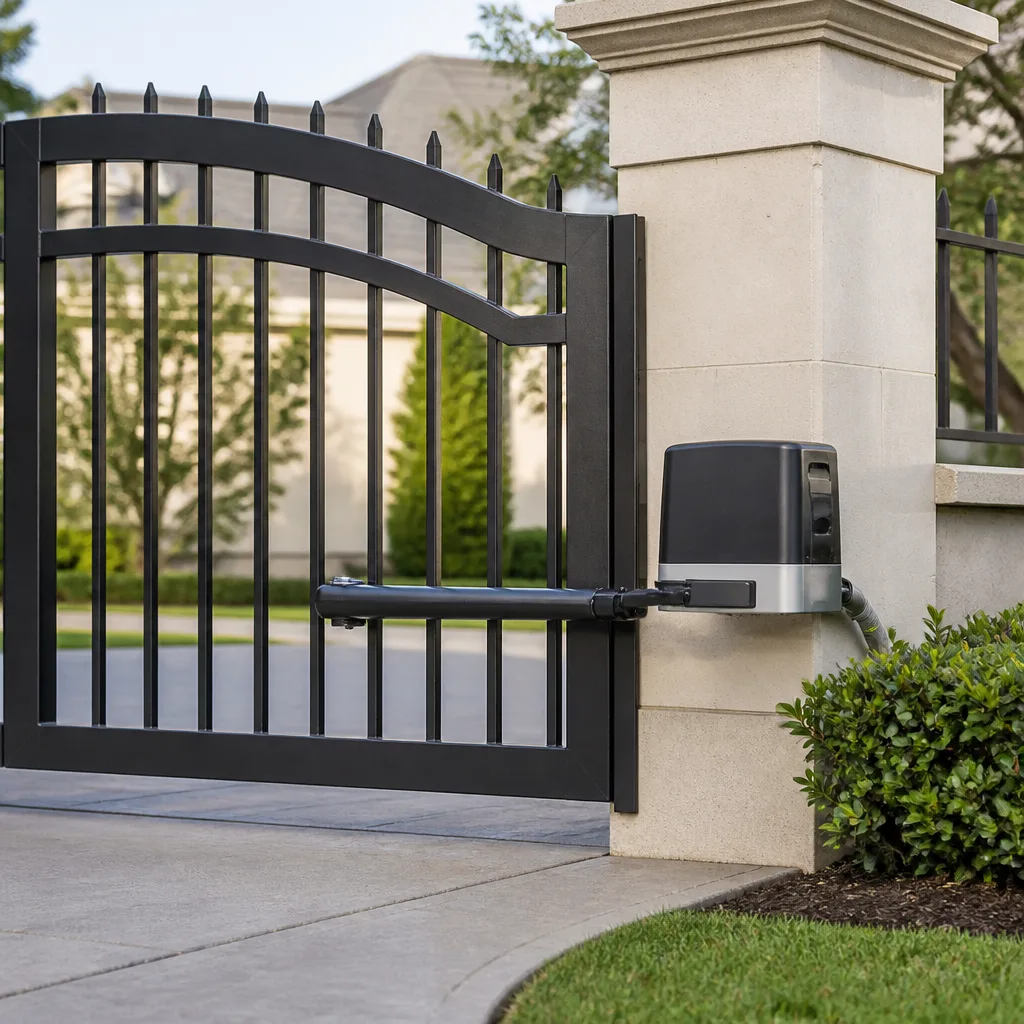 LiftMaster operators
Free on-site gate assessment - hinges, posts, and your LiftMaster or Nice gate operator checked before anything is quoted
The assessment is free and the quote is the invoice.
Get your free estimateDIY vs Professional Gate Repair: The Orlando Homeowner’s Decision Guide
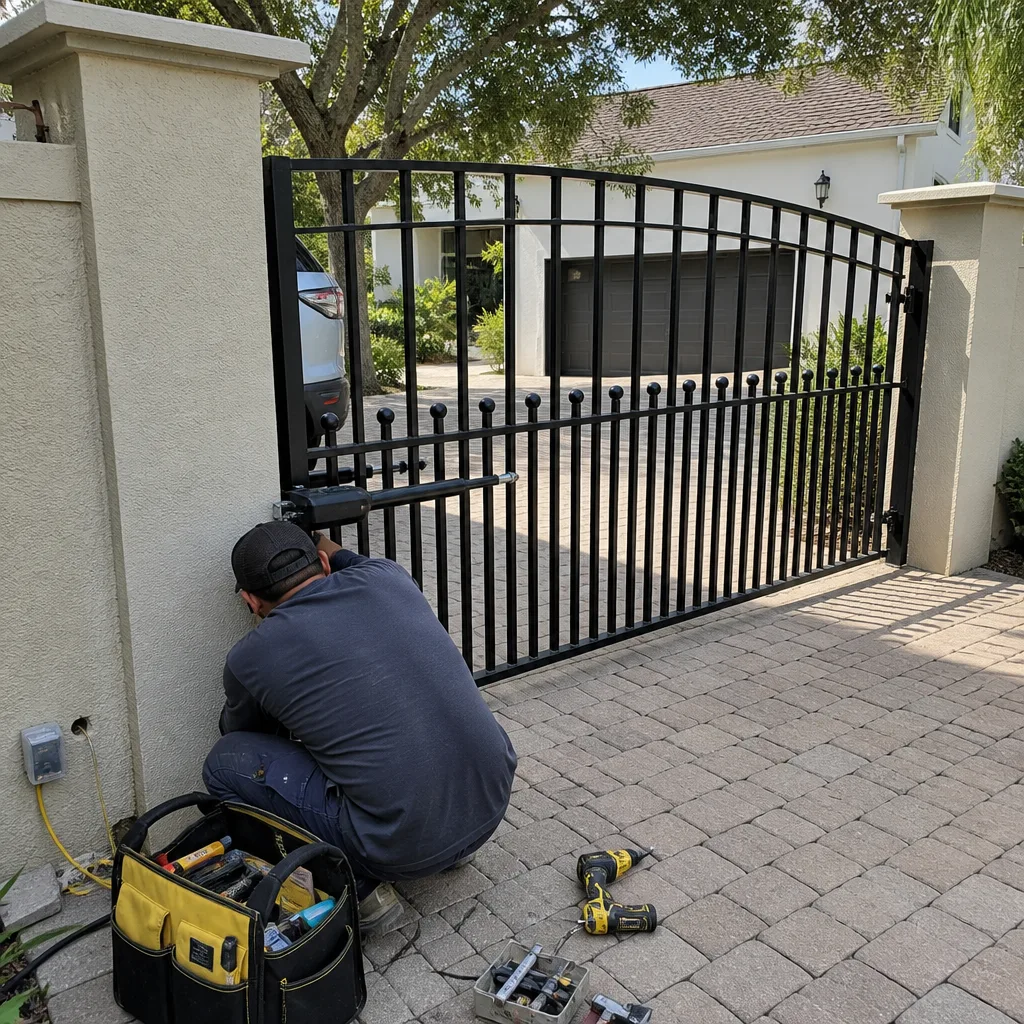
Replacing a gate remote battery is DIY. Replacing a gate control board is professional territory, not because the wiring is complicated, but because a miswired board in Florida’s grounding conditions can fry the replacement board within 48 hours. That’s a $400 mistake stacked on top of a $400 mistake, and it happens in Orlando more often than any gate company wants to admit. This guide walks through which Gate Repair tasks you can safely handle, which ones will cost you more if you try, and the exact failure types where Florida’s climate stacks the odds against the amateur.
Quick Answer
In Orlando, DIY gate repair only makes sense for battery swaps, remote reprogramming, track cleaning, and visual inspections. Anything involving the gate motor, springs, control board, or sensors is professional work, because those failures carry electrical hazards, injury risks, and code implications that make amateur repair more expensive than the service call it was meant to avoid.
Styles & brands we work with
Table of Contents
- The Orlando Gate Repair Decision Matrix
- What’s Actually Safe to DIY (and What Isn’t)
- Why Springs and Counterbalances Are Off-Limits
- The Honest Cost Comparison: DIY vs Professional
- Florida-Specific Risks: Grounding, Corrosion, and Insurance
- What You Can Do Between Professional Visits
- The Warranty Trap: What Voids Your Coverage
- Common Mistakes to Avoid
- When to Call a Professional
- Frequently Asked Questions
The Orlando Gate Repair Decision Matrix
After 17 years of repairing gates across Orlando, from College Park to Lake Nona to Winter Park, we’ve learned that most homeowners don’t need a repair manual. They need a clear line between “safe to attempt” and “stop now.” The dividing line isn’t skill. It’s consequence. A mistake with a remote costs nothing. A mistake with a torsion spring costs fingers. A mistake with a control board costs the board and whatever the surge takes with it.
Here’s the decision matrix we use when homeowners call us asking whether they should try something themselves:
| Repair Type | DIY Safe? | Primary Risk If Done Wrong |
|---|---|---|
| Remote battery replacement | Yes | None. Cheap, reversible. |
| Remote reprogramming | Yes, usually | Locks out all remotes if done incorrectly. |
| Track cleaning and debris removal | Yes | None. Improves performance. |
| Visual inspection of posts, hinges, and wheels | Yes | None, as long as you don’t touch anything under tension. |
| Sensor cleaning and alignment | Sometimes | Long-term misalignment can damage the gate’s closing cycle. |
| Limit switch adjustment | No | Incorrect settings can force the gate past its stop point, bending the frame. |
| Gate motor replacement | No | Electrical, plus motor shaft and mounting misalignment shortens motor life. |
| Spring tension adjustment | Absolutely not | High-tension injury. See section below. |
| Control board replacement | No | Fried replacement board, voided warranty, often repeat failure. |
| Photo-eye wiring repair | No | 24V low-voltage wiring is deceptively sensitive to poor splices in Florida humidity. |
The pattern here is simple. If the part costs under $30 and doesn’t carry tension, current, or load, DIY is reasonable. Everything else lives on the professional side of the line in the Orlando market, not because we want the work, but because we’re the ones un-doing amateur repairs every week.
What’s Actually Safe to DIY (and What Isn’t)
Let’s be specific. A homeowner in Orlando can replace a gate remote battery, clean debris from the track, wipe down photo-eye lenses, and reprogram a remote using the manufacturer’s instructions. Those four things cover most of what people call “gate maintenance.” They’re low-stakes, they’re reversible, and they don’t expose you to electricity or tension.
Now the adjacent territory that looks easy but isn’t:
The Photo-Eye Trap
Cleaning a photo-eye lens is DIY. Re-wiring a photo-eye is not. The wiring on modern Linear and Viking openers runs through the control board as a low-voltage circuit, and Florida’s humidity breeds corrosion at any splice point. A homeowner who twists two wires together and wraps them in electrical tape has created a failure waiting for the next rainstorm. We’ve opened junction boxes in Orlando where amateur splices looked fine on the outside and were green with corrosion on the inside.
The Limit Switch Illusion
Adjusting a limit switch doesn’t require tools beyond a screwdriver. Adjusting it correctly requires knowing the gate’s travel range, the motor’s torque curve, and what the manufacturer’s tolerance actually is. Over-adjust in one direction and the gate slams past its stop point, bending a bracket or cracking a weld. Under-adjust and the motor burns energy fighting the stop block every cycle. Both shorten motor life. Both are common consequences of DIY limit adjustments on DoorKing and Ghost Controls openers in Orlando.
The Reprogram Caveat
Remote reprogramming is legitimately DIY for most brands. But there’s a specific failure mode worth naming: holding the learn button too long on a LiftMaster or Viking opener can wipe all stored remotes, leaving every keypad and remote in the household dead until the whole system is re-enrolled. That’s not a risk to avoid reprogramming altogether. It’s a reason to read the exact sequence from the manufacturer’s manual rather than guessing.
Why Springs and Counterbalances Are Off-Limits
Gate springs and counterbalance systems hold enormous stored energy. On a rolling gate, the counterbalance is often a torsion spring wound tight inside the gate itself, holding hundreds of pounds of gate weight in check so the opener motor doesn’t have to fight the full load on every cycle. When that spring fails, the gate doesn’t stop working. It becomes heavy, fast, and unpredictable.
The injury mechanic is straightforward. A homeowner loosens the wrong bolt or winds the spring in the wrong direction, and the spring releases its stored energy instantly. The tool in the homeowner’s hand becomes a projectile. The spring itself can unwound violently enough to break fingers, hands, or wrists. On swing gates, a suddenly-released gate arm can swing a 300-pound gate panel into a person standing in the arc. These aren’t hypothetical warnings. They’re the reports we read from emergency departments when callers tell us they “gave it a try.”
On top of the physical risk, there’s the follow-on damage. An improperly tensioned spring changes the gate’s load profile, which means the motor now works harder on every cycle. A motor designed to last 10 years can fail in 18 months under that extra load. The homeowner saved $200 on a spring repair and created an $800 motor replacement. In Orlando, where salt air near lakes and conservation areas accelerates corrosion on steel components, any spring work also needs anti-seize treatment and torque calibration that most homeowners don’t have the equipment for.
This is the category where we never suggest DIY. Not because we want the work, but because the downside risk isn’t a broken gate. It’s a broken body.
The Honest Cost Comparison: DIY vs Professional
Here’s the math that most comparison articles won’t show you. The true cost of DIY gate repair isn’t the part price. It’s the part price plus the probability-weighted cost of the escalation you create.
Take a typical Orlando scenario: a gate motor that hums but doesn’t move. The capacitor has failed. A homeowner can buy a replacement capacitor online for $12 to $40. The professional repair cost for that same issue in Orlando is typically $180 to $320, including diagnosis, part, labor, and a written guarantee. On the surface, DIY saves money.
Now the escalation path. The homeowner installs the capacitor correctly, but the motor still doesn’t move. The real problem was a failed start winding in the motor itself, which the homeowner can’t diagnose without a multimeter and motor-testing experience. The $12 capacitor was a guess. The motor replacement now costs $600 to $1,200, and the homeowner has spent $12 plus a week of gate downtime. A professional diagnosis from the start would have identified the motor failure immediately.
Worse escalation: the homeowner installs the capacitor incorrectly, or the replacement part doesn’t match the original’s specifications. The motor overheats, trips the breaker, or damages the control board. The $40 part now requires a $400 board replacement on top of the original repair.
The honest comparison table for Orlando:
| Repair Scenario | DIY Parts Cost | Escalation Probability | Professional Cost Range |
|---|---|---|---|
| Remote battery replacement | $5 – $12 | Nearly zero | $25 – $45 (for the service call) |
| Track cleaning | $0 – $10 in supplies | Zero | $90 – $140 as part of a tune-up |
| Capacitor replacement | $12 – $40 | 30 – 50% if misdiagnosed | $180 – $320 |
| Sensor cleaning | $0 | Low | $90 – $130 if included with maintenance |
| Control board replacement | $150 – $400 for the board | High if self-installed | $380 – $700 installed with warranty |
| Spring tension adjustment | $30 – $80 for the spring | Extreme injury risk | $200 – $400 |
| Gate motor replacement | $250 – $600 for the motor | High | $600 – $1,200 installed |
The professional price is higher on the surface. The professional price includes the diagnosis, the right part, the correct installation, and a written warranty that covers rework. For a detailed look at what drives these costs, see our Gate Repair Cost Breakdown: The Orlando Homeowner’s Reference for 2026. In our experience at Warden Gate Repair Orlando, the average DIY attempt that ends with a call to us costs the homeowner about 40% more than the original professional quote would have been, because we now have to un-do the amateur work before we can fix the original problem.
It’s worth saying plainly: we deliver a written price before any work starts, every time. You’ll know the number before a tool is touched. If repairs don’t make sense on an older gate, we’ll tell you that too, and the estimate is free. That changes the cost comparison significantly, because you’re not gambling on a range. You’re deciding with the actual number in hand.
Florida-Specific Risks: Grounding, Corrosion, and Insurance
Florida is the worst state in the continental U.S. for gate electrical work, and it’s not close. Three forces gang up on every gate opener installed in Orlando: humidity that accelerates corrosion at every connection point, sandy soil that degrades grounding continuity, and lightning frequency that makes surge damage a matter of when, not if.
The grounding issue deserves specific attention because it’s the one DIY work interacts with most dangerously. Most Orlando homes use a driven ground rod with moderate-to-high soil resistance. When a homeowner splices into gate wiring, the splice becomes a point of higher resistance, and high-resistance points become heat sources. In humid conditions, that heat plus moisture creates a corrosion cycle that degrades the connection over weeks. What starts as a working DIY repair becomes an intermittent fault, then a dead gate, then a service call where we find the amateur splice and replace the wiring run entirely.
Now the insurance interaction. Most homeowner’s insurance policies in Florida cover sudden and accidental damage from electrical events. What they don’t cover is damage that results from unpermitted electrical modifications or work that violates local code. If a homeowner performs DIY wiring on a gate opener and that wiring later causes a fire or damages the opener, the insurance adjuster has grounds to deny the claim. The insurer doesn’t need to prove you caused the failure. They need to establish that unlicensed electrical work was performed, and the claim denial follows. We’ve seen homeowners in Orlando learn this lesson the hard way. The gate is a small part of the home, but a denied claim isn’t.
Orlando also has specific code provisions for automatic gates. Any powered gate must have a primary and secondary entrapment protection device, typically photo-eyes and a reversing edge. Those devices must be tested periodically. A homeowner who disables a photo-eye or bypasses a safety edge to “get the gate working again” has created a code violation and a safety hazard. If a child or pet is injured by that gate, the liability sits directly with the homeowner. The $150 saved on a professional repair isn’t worth the civil liability exposure.
What You Can Do Between Professional Visits
Orlando homeowners can extend gate life meaningfully without ever opening a control box or touching a spring. The work is maintenance, not repair, and it’s genuinely DIY territory. For a step-by-step approach, see our Gate Repair Maintenance Checklist for Orlando Homeowners.
- Clean the track twice a month. Orlando’s oak leaves, pine needles, and storm debris accumulate fast. A clear track reduces strain on the motor and prevents the gate from binding mid-travel. Use a leaf blower or a stiff brush. No water, no lubricants.
- Keep the photo-eye lenses clean. Wipe the lenses with a dry microfiber cloth. This takes 30 seconds and prevents most “gate won’t close” problems.
- Inspect posts and hinges monthly. Look for rust, cracks, or sagging. If you’re in Winter Park or College Park, watch for root growth from mature trees pushing posts out of alignment. Catching a shift early means a shim. Catching it late means a post reset.
- Watch the gate’s travel behavior. A gate that hesitates, reverses for no reason, or moves slower than it used to is talking to you. Note when it happens. That observation saves diagnosis time when a professional arrives.
- Test the auto-reverse monthly. Most Orlando code requirements call for this. Put a 2×4 or a traffic cone in the gate’s path and close it. The gate should reverse on contact. If it doesn’t, stop using the auto-open and call a professional. This is a safety system test, not a repair, and every homeowner can do it.
Between professional visits, these five actions cover 80% of what prolongs equipment life in Orlando’s climate. None of them require tools beyond what you already own. None of them void a warranty. All of them reduce the frequency and cost of real repairs over time.
The Warranty Trap: What Voids Your Coverage
Every major gate opener manufacturer writes its warranty to exclude damage caused by unauthorized repair. That’s not a fine-print trick. It’s a bright-line rule. If a homeowner opens the control box and replaces a part without authorized service, the manufacturer can deny warranty coverage on the subsequent failure, even if the two events are unrelated.
On LiftMaster, Ghost Controls, Viking, and DoorKing equipment, the warranty language is consistent: damage caused by improper installation, unauthorized modification, or repair by non-qualified personnel is excluded. The homeowner who replaces a capacitor as their first gate repair has just created grounds for excluding their motor failure six months later. The manufacturer doesn’t need to prove the capacitor work caused the motor failure. They need to establish that unauthorized repair occurred, and the exclusion attaches.
There’s a second trap. Many homeowners buy replacement parts online from third-party sellers that aren’t authorized distributors. When those parts fail, the homeowner’s warranty claim is denied because the part wasn’t genuine. In Orlando, we see this constantly with replacement remote controls and control boards purchased from discount sites. The part looks right, works for a few months, then fails, and there’s no recourse.
The professional path avoids this. When Warden Gate Repair Orlando performs a repair, the parts are factory-authorized for the brands we service, and the repair carries a written guarantee under the 365-Day Done Right Promise. If the repair fails within a year, the return visit is free. That’s the point most DIY comparisons miss: the homeowner isn’t just paying for a repair. They’re paying for the manufacturer relationship and the warranty coverage that comes from authorized service. For more guides & resources on making informed repair decisions, visit our blog.
Common Mistakes to Avoid
- Lubricating the wrong surface. Spraying WD-40 or white lithium grease on the track, wheels, or chain creates a dust magnet. In Orlando’s heat, that lubricant bakes into a paste that binds the gate worse than before. The only lubrication gate systems need goes on specific pivot points, using specific compounds, and usually only at professional service intervals.
- Buying a universal remote without checking compatibility. Universal remotes work with some openers and not others. A homeowner who buys a universal remote for a LiftMaster opener might discover it won’t pair, or pairs but drops the signal range. The $25 “savings” becomes a $25 paperweight.
- Tightening every bolt you can see. Some bolts on a gate are torque-specified. Over-tightening a pivot bolt can bind the hinge and increase motor load. Over-tightening a bracket bolt can crack the zinc coating and invite corrosion in Orlando’s humidity. Tightening without knowing the spec creates new problems.
- Bypassing the photo-eye because it’s “annoying.” The photo-eye is a safety device, not an inconvenience. Disabling it restores “normal” operation and creates a code violation and a liability exposure. If the photo-eye keeps triggering, the fix is alignment or replacement, not bypass.
- Using an extension cord as a permanent power source. Gate motors need a dedicated circuit with proper grounding. Running an extension cord to a gate is a fire hazard in Florida’s wet conditions and a code violation in Orlando. If your gate doesn’t have proper power, the repair is an electrical service call, not a gate repair.
- Resetting the breaker without investigating. A tripped breaker is a symptom, not a diagnosis. Resetting it without finding why it tripped lets the underlying fault persist. The next trip might happen at 3 a.m., or it might happen as a surge that takes the control board with it.
When to Call a Professional
Call a professional when the gate motor hums but doesn’t move, the gate reverses for no reason, the remote range drops suddenly, or any spring or cable shows visible damage. Call when the control panel shows an error code you don’t recognize, or when the gate makes a sound you’ve never heard before. These are diagnostic signals, and acting on them early prevents small repairs from becoming equipment replacements. In Orlando, where gate equipment operates in heat, humidity, and storm conditions, early intervention is the difference between a $200 repair and an $800 replacement.
Warden Gate Repair Orlando offers free estimates across Orlando and answers the phone with a live person around the clock at (321) 465-7089. Every job gets a written price before work starts, and every technician arrives with a name and photo you received ahead of time. You can learn more about what we do on our gate repair in Orlando page or our Warden Gate Repair Orlando home page.
Frequently Asked Questions
Gate repair in Orlando typically ranges from $90 for minor adjustments to $400 to $1,200 for motor replacements and control board work, depending on the failure type and the brand of equipment. The most common repair we perform, a capacitor or limit switch issue, usually falls between $180 and $320. Call (321) 465-7089 for a free written estimate. We’ll give you the number before any work starts.
For urgent repairs where the gate is stuck open, stuck closed, or posing a security issue, we prioritize same-day response calls in Orlando whenever scheduling allows. A live person answers our phones at any hour, and we’ll confirm a window based on technician availability in your part of town. Call (321) 465-7089 and we’ll tell you exactly when we can be there.
The most common gate repair we see in Orlando is a failed capacitor in the gate motor, followed by photo-eye misalignment from storms or landscaping shifts. Both are quick to diagnose and repair in a single visit. See our gate motor repair in Orlando page for more detail.
In Orlando’s climate, a properly maintained gate opener typically lasts 10 to 15 years, with the motor itself outliving the control board in about half of cases. Salt air near lakes, heavy tree cover, and frequent lightning can shorten that. See our electric gate repair in Orlando page for how we extend that lifespan.
We service LiftMaster, FAAC, BFT, Linear, Viking, Ghost Controls, DoorKing, Elite, and Mighty Mule equipment. If your opener falls outside that list, call us anyway. We’ll tell you honestly whether we can help, or point you to the right place. The conversation is free.
If a repair we perform fails within 365 days, the return visit and the rework are free. It’s a written guarantee on every job, and we honor it without questions, without fine print, and without a fight. That’s the whole reason we put it in writing.
The Bottom Line
The DIY vs professional question in Orlando isn’t really about skill. It’s about which failures carry hidden consequences that make amateur work more expensive than the professional cost it was meant to avoid. Remote batteries, track cleaning, and sensor wipes are your territory. Springs, motors, boards, and wiring are ours. When a gate is on the wrong side of that line, the cost of guessing wrong is higher than the cost of calling right the first time. We’re at (321) 465-7089, we answer live, and we’ll give you a written price before a single tool comes out of the truck.
Written by Cole Rafferty, Owner at Warden Gate Repair Orlando, serving Orlando since 2008.
See the difference
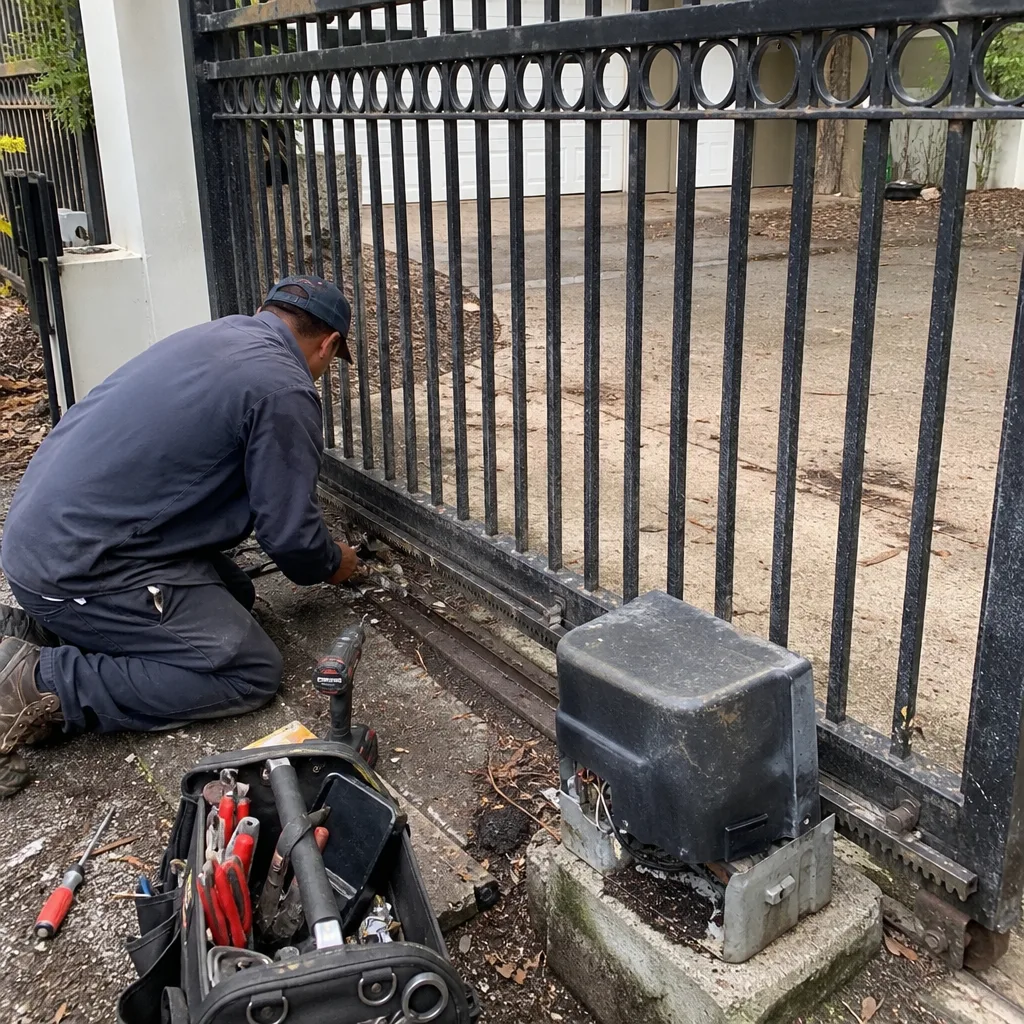 Before
 After
After Before
 After
After Before
 After
After